In today's fast-paced industrial world, finding ways on how to improve efficiency with material handling equipment is crucial. According to industry expert Sarah Johnson, "Efficient material handling reduces waste and enhances productivity." She emphasizes that companies must adopt innovative strategies to streamline their operations.
Material handling equipment plays a vital role in logistics and warehouse management. From forklifts to conveyor belts, these tools can significantly impact overall efficiency. However, many organizations overlook basic yet effective techniques. For instance, regular maintenance of equipment ensures optimal performance and minimizes downtime.
Furthermore, employee training is often neglected. Workers must be skilled in using equipment properly. This not only reduces the risk of accidents but also enhances productivity. Each strategy, though seemingly simple, requires thoughtful implementation. Reflecting on current practices can reveal areas in need of improvement. Adopting a proactive stance is essential for fostering an efficient working environment.
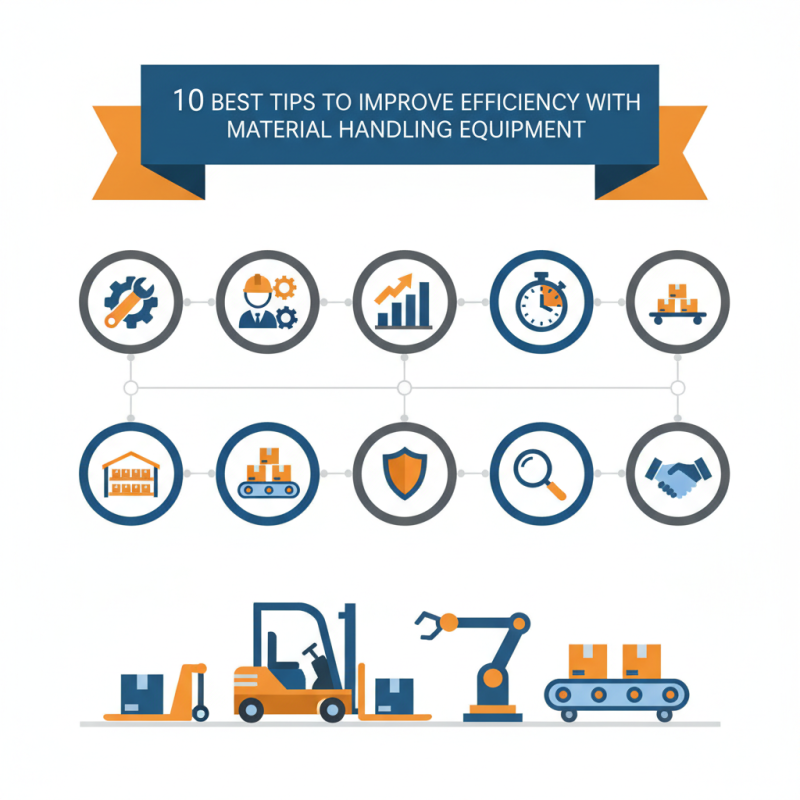
Efficiency in material handling equipment is crucial for optimizing operations. According to the Material Handling Industry of America, efficient systems can improve productivity by up to 30%. This increase often translates to significant time and cost savings for companies. However, many facilities still rely on outdated equipment, which can hinder performance. A recent study found that over 40% of warehouses report inefficiencies due to equipment malfunctions.
Proper training for staff using material handling equipment is often overlooked. Assessment of skills can reveal gaps that impact efficiency. The Occupational Safety and Health Administration reports that about 20% of all workplace injuries are related to improper equipment usage. Addressing these issues is essential to maintain a safe and effective work environment. Investing in training can boost staff confidence and lead to better handling practices.
Maintenance of equipment plays a vital role as well. Regular inspections can prevent unexpected breakdowns, which often lead to costly downtime. Industry statistics indicate that 25% of companies experience equipment failures annually. To mitigate this, companies should adopt preventive maintenance schedules. Many organizations report a direct correlation between well-maintained equipment and improved productivity levels. The commitment to efficiency requires continuous evaluation and adaptation.
This chart illustrates the potential percentage improvement in efficiency from various tips related to Material Handling Equipment. Implementing these strategies can lead to significant gains in operational productivity.
Assessing your current material handling processes is crucial for improvement. Start by mapping out your entire operation. Identify where bottlenecks occur. Observe how workers interact with equipment. Are they using the tools effectively? This is a key question to consider. Look for delays and inefficiencies in every step.
Utilize data to track performance. Monitor the time taken for each task. This will reveal areas needing attention. Conduct regular audits of your equipment. Are they up to standard? Inspect safety features and functionality. Sometimes, an outdated machine can slow down the entire process. Engage your team to gather feedback. They often have insights you might overlook.
Reflect on your current workflows. Are they designed for speed and efficiency? Small changes can yield significant results. For instance, reorganizing storage layouts can enhance access. Don't hesitate to challenge the norms and rethink processes. Improvement is an ongoing journey, not a one-time effort.
| Tip Number | Tip Description | Expected Outcome | Implementation Difficulty (1-5) |
|---|---|---|---|
| 1 | Conduct a workflow analysis | Identify bottlenecks | 3 |
| 2 | Implement automation technologies | Reduce manual handling | 4 |
| 3 | Train employees regularly | Enhance skills | 2 |
| 4 | Evaluate equipment suitability | Increase efficiency | 3 |
| 5 | Optimize layout | Reduce travel time | 4 |
| 6 | Monitor performance metrics | Data-driven decisions | 3 |
| 7 | Implement just-in-time (JIT) inventory | Decrease holding costs | 4 |
| 8 | Use ergonomic equipment | Increase safety and comfort | 2 |
| 9 | Regular maintenance schedule | Reduce downtime | 3 |
| 10 | Leverage data analytics | Improve processes | 5 |
In today's fast-paced environment, implementing technology solutions in material handling is essential. Automation tools can significantly reduce errors and improve speed. Integrating scanners and RFID technology streamlines inventory management. Your team will spend less time searching for items.
Consider using data analytics for decision-making. It allows you to identify inefficiencies and address them. Regularly review your processes. Are they still effective? Sometimes, what worked yesterday might not suit today's needs.
Don't forget about employee training. A skilled workforce can leverage technology better. Invest in regular training sessions. This ensures your team is competent and confident. Efficiency relies on both the equipment and the people using it.
Training employees on material handling equipment is crucial for improving efficiency. Many workplaces overlook this step. Without proper training, equipment misuse can lead to accidents and damage. Ensuring that employees fully understand the machinery is vital. Well-structured training programs enhance safety and productivity.
Interactive workshops can be an effective way to engage employees. Hands-on experience allows them to familiarize themselves with the equipment. It helps to build confidence in their skills. However, not all training sessions will be perfectly executed. Some workers may still struggle with the equipment. It's essential to gather feedback and adjust the training accordingly.
Reinforcement is key after initial training. Regular refreshers can keep skills sharp and safety top of mind. Encouraging a culture of continuous learning can foster improvement. Employees should feel comfortable sharing their challenges. Recognizing areas for development is important. This open dialogue can lead to more effective use of equipment.
Regular maintenance is essential for ensuring the longevity and efficiency of material handling equipment. Small lapses can lead to significant downtime. A routine check on hydraulic systems, for example, can prevent leaks and performance issues. Ensure all connections are secure and inspect for wear.
Implementing preventive maintenance tips can boost operational efficiency. One tip is to establish a routine lubrication schedule. Lubricated parts reduce friction, leading to better performance. Another tip involves training staff. Well-trained employees can identify minor issues before they escalate. This proactive approach is often overlooked but critical for smooth operations.
Additionally, consider keeping a log of machine performance and maintenance activities. This log helps track patterns and may reveal problems. Observing equipment behavior over time can uncover inefficiencies. Reflect on your current practices, as even small changes can yield positive results.
: It can boost productivity by up to 30%, saving time and costs.
Over 40% of warehouses report inefficiencies from equipment malfunctions.
About 20% of workplace injuries stem from improper equipment usage, revealing training gaps.
Regular inspections prevent breakdowns, reducing costly downtime and enhancing productivity.
Companies should establish preventive maintenance schedules to maintain efficiency.
Automation tools reduce errors, speed up processes, and streamline inventory management.
Regularly assess processes to ensure they still meet current operational needs.
A skilled workforce can maximize the benefits of technology, improving overall efficiency.
Regular lubrication reduces friction, leading to better machine performance.
Logging maintenance activities can reveal patterns and potential issues, aiding proactive management.
Improving efficiency with material handling equipment is crucial for optimizing overall operational performance. To begin with, it's essential to assess your current material handling processes to identify areas for improvement. This involves a thorough analysis of workflows and identifying bottlenecks that may hinder productivity. Implementing technology solutions, such as automation and advanced tracking systems, can significantly enhance the efficiency of your material handling operations.
Furthermore, training employees on the optimal use of equipment ensures that they are well-equipped to handle tasks effectively and safely. Regular maintenance practices should also be prioritized to guarantee the longevity and efficiency of your equipment. By focusing on these strategies, organizations can learn how to improve efficiency with material handling equipment and drive better results in their operations.

Progan Lift