Extending a crane, hoist, or other lifting machine requires more than occasional repairs. It requires disciplined daily care. In coastal Chinese factories, salt air can attack painted frames, electrical cabinets, and wire ropes. In dusty workshops, particles can enter brakes, bearings, and limit switches. These details matter.
John Moubray, a leading reliability-maintenance expert, said, “Maintenance is ensuring that physical assets continue to do what their users want them to do.” His principle explains how to extend the lifespan of lifting machinery. The goal is not simply to keep equipment moving. The goal is to keep it safe, accurate, and dependable.
This guide examines ten practical methods. They include scheduled inspections, correct lubrication, controlled loading, rope and chain monitoring, brake testing, electrical protection, corrosion control, operator training, accurate maintenance records, and timely component replacement. A technician may notice a flattened rope strand before a serious failure occurs. A supervisor may discover that a crane repeatedly reaches its rated load. Small clues become expensive problems when ignored.
Do not trust appearance alone. A clean hoist can still contain worn gears or weakened fasteners. Manufacturer instructions and applicable safety requirements should guide every inspection. Qualified personnel should examine critical components, especially brakes, hooks, limit devices, and load-bearing structures.
Some recommendations will not fit every site. Humidity, duty cycles, temperature, and lifting frequency change the maintenance plan. That is the uncomfortable part. There is no perfect universal schedule. Careful records, honest inspections, and periodic review remain essential. The strongest lifespan strategy is consistent, evidence-based attention.
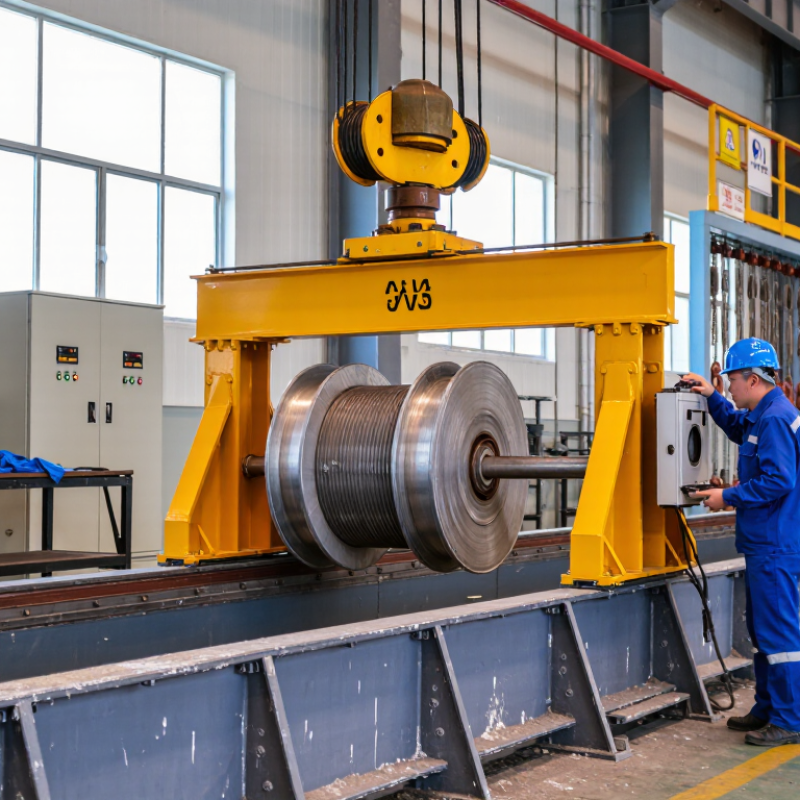
Extending a lifting machine’s life starts with classifying its real duty cycle. GB/T 3811 and ISO 4301 assess more than daily operating hours. They consider utilization, load spectrum, and the number of working cycles. ISO 4301 commonly uses M1 to M8 classes, while GB/T 3811 provides corresponding working-class evaluations under its applicable requirements. These systems should not be treated as automatically interchangeable. Check the current standard edition and project specifications.
A crane lifting 80% of its rated load every hour faces different stress from one lifting 20% occasionally. Record actual loads, starts, travel distances, and idle periods. Inspectors can then compare field data with the selected class. In practice, incomplete records are common. That weakness matters. A guessed duty cycle may lead to unsuitable inspections, lubrication intervals, or replacement plans. Reassess the classification when production changes.
Tips: Keep a simple load log near the operator station. Note the load weight, cycle count, and unusual impacts. Review the log monthly with maintenance staff. Watch for repeated overload alarms, brake heating, wire-rope flattening, and cracked paint around welded joints. These details may reveal a harsher load spectrum than paperwork suggests. Leave assumptions visible in the maintenance file. That is less tidy, but more reliable.
| No. | Lifespan Extension Method | Recommended Engineering Practice | Duty-Cycle Data to Record | GB/T 3811 Classification Reference | ISO 4301-1 Classification Reference | Primary Reliability Benefit |
|---|---|---|---|---|---|---|
| 1 | Classify the actual duty cycle before selecting or modifying equipment | Establish the total design operating time, average operating time per day, number of working cycles, lifted-load distribution, and the severity of starts, stops, and impacts. Do not classify equipment only by rated capacity. | Total operating time; daily operating hours; cycle count; percentage of rated load; frequency of dynamic events. |
Utilization class U0–U10 Load spectrum class Q1–Q4 Overall group A1–A8 |
Utilization class U0–U9 Load spectrum class Q1–Q4 Overall group A1–A8 |
Prevents under-design, overuse, and unsuitable replacement decisions. |
| 2 | Prevent overloads and shock loading | Use load indicators, rated-load limiters, controlled lifting, and clear operating procedures. Avoid snatching a slack sling, dragging loads, side pulling, or lifting loads that are stuck to the ground. | Maximum lifted load; overload events; impact events; side-pull observations; load-limiter activations. | Heavy or highly variable loading generally increases the selected Q class toward Q3–Q4. | Heavy or highly variable loading generally increases the selected Q class toward Q3–Q4. | Reduces fatigue damage in structural members, drums, sheaves, gears, shafts, and brakes. |
| 3 | Control acceleration, braking, and reversing | Use smooth acceleration and deceleration settings appropriate to the load and travel path. Minimize abrupt reversing and repeated inching unless the control system is designed for that service. | Starts and stops per hour; reversing frequency; acceleration time; braking frequency; inching duration. | Frequent cycles increase utilization toward higher U classes and may raise the overall group from light to intensive service. | Frequent cycles increase utilization toward higher U classes and may raise the overall group from light to intensive service. | Limits thermal stress, mechanical shock, wheel wear, and brake-lining deterioration. |
| 4 | Maintain lubrication according to component and environment | Use the specified lubricant type, quantity, cleanliness, and application method for gears, bearings, wire ropes, sheaves, and open gears. Adjust the maintenance plan for dust, water, temperature, and corrosive atmospheres. | Lubrication date; lubricant condition; contamination; temperature; leakage; component operating hours. | Lubrication planning should reflect the selected U, Q, and A class rather than using one universal interval. | Lubrication planning should reflect the selected U, Q, and A class rather than using one universal interval. | Reduces friction, pitting, overheating, corrosion, and premature bearing failure. |
| 5 | Inspect and replace wire ropes based on condition | Inspect for broken wires, diameter reduction, corrosion, kinks, birdcaging, crushing, and distortion. Check fleet angle, reeving, lubrication, and correct rope seating on drums and sheaves. | Broken-wire count; measured rope diameter; corrosion level; deformation; reeving condition; operating hours. | Higher utilization and heavier load spectra require more frequent condition checks and stricter retirement decisions. | Higher utilization and heavier load spectra require more frequent condition checks and stricter retirement decisions. | Reduces the probability of rope failure and protects drums, sheaves, and lifting accessories. |
| 6 | Protect hooks, sheaves, drums, and lifting accessories | Check hook deformation, cracks, latch operation, sheave-groove wear, drum winding, pins, shackles, slings, and spreader beams. Keep the load aligned with the lifting axis. | Hook throat opening; latch condition; groove wear; drum-flange condition; accessory inspection results. | Frequent lifting and high load-spectrum severity support a higher inspection priority within the selected A1–A8 group. | Frequent lifting and high load-spectrum severity support a higher inspection priority within the selected A1–A8 group. | Controls stress concentration, rope damage, load instability, and dropped-load hazards. |
| 7 | Keep brakes correctly adjusted and tested | Verify stopping performance, holding capability, lining or disc condition, spring condition, hydraulic or electromagnetic operation, and manual-release mechanisms. Investigate any drift or abnormal noise immediately. | Stopping distance; holding test result; lining thickness; brake temperature; adjustment history; fault events. | High cycle counts and high load spectra increase brake thermal and mechanical duty; the selected class should reflect actual service. | High cycle counts and high load spectra increase brake thermal and mechanical duty; the selected class should reflect actual service. | Maintains safe load holding and reduces heat-related wear and unplanned downtime. |
| 8 | Maintain electrical, control, and protection systems | Inspect contactors, drives, motors, cables, limit switches, emergency stops, overload protection, grounding, control panels, and thermal protection. Keep enclosures clean, dry, and correctly sealed. | Motor current; temperature; fault codes; insulation condition; limit-switch tests; emergency-stop tests; start frequency. | Frequent starts and higher utilization require verification that motors, drives, controls, and protection devices match the selected duty group. | Frequent starts and higher utilization require verification that motors, drives, controls, and protection devices match the selected duty group. | Prevents electrical overheating, uncontrolled motion, nuisance trips, and control-related damage. |
| 9 | Control corrosion, contamination, and operating environment | Remove dust and debris, repair damaged coatings, control water ingress, protect exposed components, and select suitable environmental measures for humidity, salt, chemicals, heat, or cold. | Temperature; humidity; dust concentration; salt or chemical exposure; coating condition; water-ingress observations. | Environmental severity does not replace the U/Q classification; it must be included in component selection and maintenance planning. | Environmental severity does not replace the U/Q classification; it must be included in component selection and maintenance planning. | Slows structural corrosion, insulation degradation, lubricant contamination, and seal failure. |
| 10 | Use condition-based maintenance and traceable records | Record operating hours, lifted-load history, faults, inspections, repairs, measurements, and replaced parts. Use vibration, temperature, oil, current, or visual trend data where appropriate. | Operating-hour meter; cycle counter; vibration; temperature; oil condition; fault history; inspection findings. | Update the design-duty assessment when actual use differs from the assumed U, Q, or A classification. | Update the design-duty assessment when actual use differs from the assumed U, Q, or A classification. | Detects deterioration early and supports evidence-based repair, refurbishment, and replacement decisions. |
Duty cycles depend on operating hours, load levels, cycle counts, travel distances, and idle periods. Daily hours alone are insufficient. Record real usage.
Keep a simple log near the operator station. Record load weight, cycle count, starts, travel distance, and unusual impacts. Review it monthly with maintenance staff. Incomplete records weaken decisions.
No. Similar class names may use different assessment methods and requirements. Check the current standard edition and project specifications. Do not assume equivalence.
Reassess it when production changes, loads increase, or starts become more frequent. Heavy lifting may create a harsher load spectrum than paperwork suggests. Conditions change.
Inspect hydraulic oil, filters, pins, bushings, brakes, tires, ropes, and safety switches. Check battery condition, contamination, temperature, and vibration. The interval is a baseline, not a rule without judgment.
Shorten intervals for severe dust, salt air, frequent starts, heavy lifting, or high hydraulic temperatures. Use service history and oil analysis where suitable. Guessing is risky.
Watch for repeated overload alarms, brake heating, oil leaks, flattened ropes, abnormal vibration, and cracked paint near welded joints. Small clues matter. Photograph unusual findings.
Test brakes for stopping and holding ability without excessive drift. Move hooks, trolleys, or bridges slowly toward travel limits. Confirm reliable stopping.
Compare current readings with previous records, not only pass or fail labels. Isolate the machine when results worsen sharply. Arrange a competent technical assessment. A tidy checklist can still hide rushed work.
This guide explains how to extend the lifespan of lifting machinery through structured inspection, maintenance, and safe operating practices. It begins by classifying duty cycles according to GB/T 3811 and ISO 4301 load-spectrum categories, allowing maintenance schedules and component selections to match actual working intensity. OEM-recommended 250-hour service intervals should serve as a practical baseline, with additional checks required for equipment operating in severe environments or under heavy loads.
Hydraulic systems should be protected through disciplined contamination control, using ISO 4406 particle-code targets to monitor fluid cleanliness and reduce wear. Critical load-bearing parts also require clear replacement limits: ropes should be discarded when diameter loss reaches 10%, while hooks should be removed from service when throat opening increases by 15%. Finally, brakes, limiters, and rated-load performance should be tested in accordance with GB/T 6067.1 requirements. Together, these measures help prevent premature failures, improve reliability, and support safer, longer equipment service life.

 Progan Lift