China’s lifting sector is changing through smarter controls, electric drives, sensor-based monitoring, and more adaptable crane designs. For buyers and engineers, the key question is practical: what are the latest innovations in lifting technology, and which ones improve safety, uptime, or energy use on real sites? This overview examines ten developments associated with China’s market, while distinguishing proven equipment features from emerging claims.
The wider industrial shift offers useful context. The International Federation of Robotics reported 4,281,585 industrial robots operating worldwide in 2023, a 10% increase from 2022. That figure is not specific to lifting equipment, but it shows how quickly automation is entering industrial work. The International Energy Agency’s Renewables 2024 report projects about 5,500 GW of new renewable power capacity between 2024 and 2030. Building and maintaining that infrastructure will require dependable lifting across factories, ports, wind farms, and construction sites. Small details matter: a load sensor that catches overload early, or a drive that reduces wasted power during repeated lifts.
Not every new feature delivers equal value. A digital twin may improve maintenance planning, yet poor data can make its predictions unreliable. This article therefore considers both the promise and the limits of innovations such as remote operation, AI-assisted controls, energy recovery, and connected inspection. The evidence is uneven, and product performance still depends on testing, operator training, and the job itself.
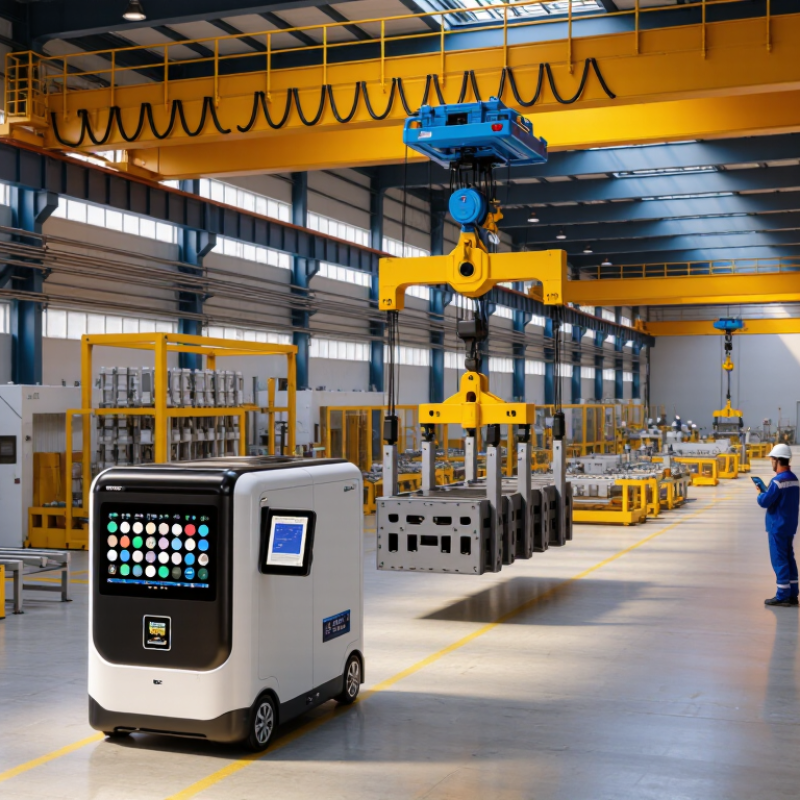
In China, lifting technology covers more than cranes. It includes tower, mobile, and overhead cranes; wire-rope and chain hoists; elevators; and the controls that coordinate them. A typical factory system combines a steel frame, motor, gearbox, brake, load sensor, and operator controls. In ports and workshops, sensors can monitor load weight and movement, while variable-speed drives help control starts and stops. Loads still swing. Wind, uneven ground, and poor visibility can complicate even a well-designed lift.
Automation is also part of the picture. The International Federation of Robotics reported 276,288 industrial robot installations in China in 2023, representing 51 percent of global installations that year, in World Robotics 2024. Some industrial robots support material handling and palletizing, but this figure is not a measure of China’s crane or hoist market. That distinction matters. It shows the scale of industrial automation around lifting tasks, not the number of lifting machines.
For buyers and engineers, the practical questions are specific: What is the rated load? How often will the equipment cycle? Can operators see the hook and load clearly? Reliable systems also need braking checks, overload protection, and documented maintenance. Digital monitoring can flag unusual motor temperatures or repeated overloads, but sensors do not replace inspections. The technology is advancing; consistent use and maintenance remain uneven across sites.
China’s lifting industry has changed from building machines mainly for strength to engineering systems for precision, safety, and uptime. Across ports, factories, and construction sites, operators increasingly rely on variable-speed drives and load sensors to move heavy materials with smoother starts and fewer abrupt stops. The difference can be felt in a workshop: a suspended steel coil sways less, while the operator makes smaller corrections.
Digital monitoring has also reshaped maintenance. Sensors can track motor temperature, vibration, and operating cycles, helping technicians spot wear before a breakdown stops a production line. Remote diagnostics may shorten troubleshooting, though they depend on reliable connectivity and good-quality data. Technology helps, but it does not replace skilled inspection.
Compact controls, modular components, and more energy-efficient electric systems are influencing newer lifting equipment. Some sites are also testing automated movement for repetitive tasks, while keeping human oversight for unusual loads or changing conditions. Progress is uneven. Older equipment may be costly to upgrade, and software can add new training demands. A sensible measure of innovation is not how many screens a machine has, but whether it lifts a real load steadily, predictably, and safely through a full shift.
China Top 10 Latest Innovations in Lifting Technology?
Ten Recent Innovations in Chinese Lifting Technology
Recent Chinese lifting technology is evolving through smarter controls, cleaner power, and closer equipment monitoring. Key developments include variable-frequency drives, regenerative braking, electric and hybrid powertrains, load-sensing systems, anti-sway control, digital twins, predictive maintenance, remote operation, lightweight structures, and automated positioning. These are industry trends, not features found on every crane or hoist.
The International Federation of Robotics’ World Robotics 2024 report recorded 276,288 industrial robot installations in China in 2023, or 51% of global installations. That figure is not specific to lifting equipment, but it shows the scale of the country’s automation ecosystem. Connectivity can also support remote diagnostics: China’s Ministry of Industry and Information Technology reported 4.25 million 5G base stations nationwide by the end of 2024. Still, connectivity alone cannot make a lift safe. Sensors need calibration, operators need practical training, and software must handle changing loads and site conditions. Details matter.
On a busy construction site, anti-sway controls can steady a suspended steel section, while load monitoring can warn crews before a crane approaches its rated limit. Digital twins may help plan complex lifts, yet their value depends on accurate site data. There is room to improve: automation can reduce routine errors, but it cannot replace sound lift planning or experienced judgment.
| No. | Innovation | How It Works | Typical Lifting Application | Measurable Data or Performance Indicator | Practical Value |
|---|---|---|---|---|---|
| 1 | 5G-Enabled Remote Crane Operation | Video, control commands, and equipment status are transmitted between the crane and a remote operator station over a cellular network. | Container terminals, steelworks, and other controlled industrial sites. | Control-signal latency, network availability, video-feed continuity, and remote operating hours. | Can move operators away from elevated, hot, dusty, or otherwise hazardous locations. |
| 2 | Automatic Load-Sway Suppression | Sensors and control software adjust hoist, trolley, or travel movements to limit load oscillation during crane motion. | Overhead cranes, container cranes, and automated material-handling systems. | Load swing angle, settling time, positioning error, and cycle time. | Supports more controlled load placement and can reduce delays caused by swinging loads. |
| 3 | Intelligent Load Monitoring and Overload Protection | Load sensors and crane-position data are used to monitor operating conditions and warn or inhibit motion when configured safety limits are reached. | Mobile, tower, crawler, and overhead cranes. | Measured load, rated-capacity utilization, boom angle, working radius, and alarm events. | Helps operators monitor changing load conditions; limits and functions depend on the crane design and configuration. |
| 4 | Digital-Twin and Connected-Crane Monitoring | A digital representation of the crane is linked to operating data from sensors, controllers, and maintenance records. | Large construction projects, ports, factories, and fleet-management operations. | Operating hours, load cycles, component temperatures, fault codes, and maintenance events. | Provides a shared view of equipment condition and can help plan inspections and maintenance. |
| 5 | Predictive Maintenance Using Equipment Data | Trends in vibration, temperature, motor current, and fault history are reviewed to identify potential deterioration before a breakdown. | High-use cranes in ports, manufacturing facilities, and logistics hubs. | Bearing vibration, motor temperature, drive faults, inspection findings, and unplanned downtime. | Can help maintenance teams prioritize inspections based on equipment condition rather than a fixed schedule alone. |
| 6 | Energy-Regenerative Hoisting Drives | A regenerative drive can return some electrical energy to the supply or an onboard storage system during braking or lowering, subject to system design. | Electric overhead, gantry, and port cranes with frequent lifting and lowering cycles. | Energy consumed per operating hour or lift cycle, regenerated energy, and drive-system efficiency. | May reduce net energy use in suitable duty cycles; actual savings depend on operating pattern and electrical configuration. |
| 7 | Electrified and Hybrid Crane Systems | Electric drives, battery storage, or hybrid power systems supply some or all crane functions, depending on the equipment type. | Ports, indoor factories, and construction sites with suitable charging or electrical infrastructure. | Electrical energy use, fuel use where applicable, operating hours, and local exhaust emissions. | Can reduce on-site exhaust emissions for electrically powered operations and may lower noise in some operating conditions. |
| 8 | Synchronized Multi-Crane Lifting Control | Coordinated control and load measurements help multiple cranes share a lift while operators follow an engineered lifting plan. | Large or long loads that cannot be handled by one crane within the required lifting arrangement. | Load carried by each crane, hoist displacement, lifting speed, and load-sharing difference. | Improves visibility of load distribution; the lift still requires task-specific engineering and qualified supervision. |
| 9 | Wind-Aware Lifting and Operating Assistance | Anemometers and operating-state data provide wind alerts or help enforce equipment-specific operating limits. | Tower cranes, port cranes, and large outdoor lifting equipment. | Wind speed, gusts, boom or jib position, and wind-related alarms or stoppages. | Supports decisions about whether conditions are suitable for lifting; permitted wind limits are equipment- and task-specific. |
| 10 | Modular Crane Design and Digital Lift Planning | Standardized components and 3D planning tools help teams configure equipment, check clearances, and plan assembly and lift sequences. | Large construction, infrastructure, industrial installation, and wind-energy projects. | Component configuration, lift radius, clearance, ground-bearing requirements, and planned versus actual lift sequence. | Can improve planning coordination and reveal spatial or setup constraints before equipment is assembled on site. |
Note: These are technology trends used or developed across China's lifting-equipment sector, not a ranking of specific products. Performance figures vary by equipment, site, configuration, and operating conditions; the indicators listed should be measured for the individual application.
On construction sites, modern lifting systems pair variable-speed drives with load cells and anti-sway controls. A crane operator can place a steel beam more steadily, even when wind nudges the load. Sensors also record overloads and maintenance warnings. The benefit is practical: fewer abrupt movements and clearer equipment checks. But sensors cannot replace a trained operator or a sound lift plan. That distinction matters.
Factories and distribution centers use automated hoists, robotic arms, and autonomous mobile platforms to move components between workstations. The International Federation of Robotics’ World Robotics 2024 report recorded 541,302 industrial robot installations worldwide in 2023. This figure covers industrial robots, not lifting equipment alone; it shows the wider automation environment these systems join. In warehouses, coordinated lifts can reduce repetitive handling, though cramped aisles and changing loads still challenge automation. Real sites are messier than diagrams.
Digital monitoring can help maintenance teams spot motor heating or unusual vibration before equipment stops. UNEP and the Global Alliance for Buildings and Construction reported that buildings and construction accounted for 34% of global energy demand in 2022. That sector-wide figure is not a measure of crane efficiency, but it reinforces the value of tracking energy use. Electric drives may cut local exhaust emissions indoors, while battery charging and peak loads need careful planning. The trade-off is easy to overlook.
China’s Latest Innovations in Lifting Technology: Safety Standards and Emerging Trends
Lifting technology in China is advancing through smarter controls, lighter components, and connected monitoring systems. Yet innovation matters only when equipment remains safe under real working conditions. Check rated capacity, load limits, emergency stops, and inspection records before operation. Operators also need practical training, not just a quick screen demonstration. Small details matter.
Sensors can track load, temperature, vibration, and operating cycles, helping maintenance teams spot changes before a failure occurs. Anti-sway controls may steady suspended loads, while remote diagnostics can reduce unnecessary site visits. These tools are useful, but they are not foolproof. A sensor can miss a developing fault, and poor data can create false confidence. Companies should verify applicable safety standards for each machine and worksite, then combine inspections with competent human judgment. That balance is still easy to underestimate.
Tips: Confirm the load chart, inspect hooks and slings, and test alarms before lifting. Keep people clear of suspended loads. Record defects promptly, and stop work when conditions change.
A comparison of minimum design factors specified by U.S. OSHA for selected sling types. The design factor is the ratio of minimum breaking strength to rated capacity.
Source: U.S. Occupational Safety and Health Administration, 29 CFR 1910.184. Requirements vary by sling type and applicable conditions; always consult the regulation and manufacturer instructions.
It includes tower, mobile, and overhead cranes, plus wire-rope and chain hoists. Elevators and control systems are part of it too.
A steel frame, motor, gearbox, brake, load sensor, and operator controls may work together. The hook and suspended load still need clear visibility.
Sensors can monitor load weight and movement. Variable-speed drives help make starts and stops smoother. Loads still swing.
No. China recorded 276,288 industrial robot installations in 2023, or 51 percent of global installations. That figure describes industrial robots, not cranes or hoists.
More systems use load sensors, variable-speed drives, and digital monitoring. In a workshop, a steel coil may sway less during a controlled lift.
It can track motor temperature, vibration, and operating cycles. Alerts may help technicians notice wear earlier, but good data and connectivity matter.
No. Braking checks, overload protection, and documented maintenance remain important. Screens are not enough.
Check rated load, operating cycles, visibility, and maintenance needs. Older equipment can be costly to upgrade, and new controls require training. I may be oversimplifying, but a steady lift through a full shift matters more than extra screens.
This article explores how lifting technology in China has developed from conventional mechanical equipment into a more connected, precise, and adaptable field. It explains what lifting technology includes and how changing demands in construction, manufacturing, and logistics have encouraged new approaches. The discussion highlights ten recent innovation areas, including intelligent controls, remote operation, sensor-based load monitoring, improved energy efficiency, modular equipment, and systems designed to support more accurate positioning and maintenance.
It also considers how these developments serve different workplaces, from moving heavy materials on construction sites to handling goods in industrial facilities and distribution centers. Rather than focusing only on equipment performance, the article examines the role of operator training, safety standards, inspection, and risk prevention. It concludes by looking at emerging trends such as greater automation and data-informed operation, helping readers understand what are the latest innovations in lifting technology and how they may shape safer, more efficient lifting practices.

Progan Lift