Choosing lifting equipment is rarely a simple question of price or power. The real decision begins with the load, the workplace, and the people using the equipment. When managers ask how to choose between manual and electric lifting solutions, they should examine weight, lifting frequency, travel distance, available space, and operator effort.
Peter Drucker, a respected operations-management authority, once said, “There is nothing so useless as doing efficiently that which should not be done at all.” His warning fits lifting decisions surprisingly well. An electric hoist may reduce physical strain, yet it can add maintenance, charging requirements, training needs, and installation costs. A manual solution may suit occasional lifting, short movements, and simple environments. It may become inefficient when workers repeat the same lift throughout an entire shift.
Look closely at the work area. Is the floor uneven? Is power available? Does the load need precise positioning? Can one trained operator control the equipment safely? These practical details often matter more than impressive specifications. The safest option is not always the strongest option. It is the solution that matches the real task.
Experience also shows that decisions can change over time. A manual device may work today but create fatigue as production increases. An electric system may seem excessive until injury risks, delays, and labor costs are considered. No checklist is perfect. That uncertainty deserves honest review. Test the workflow, consult qualified lifting professionals, and reassess the choice after actual use.
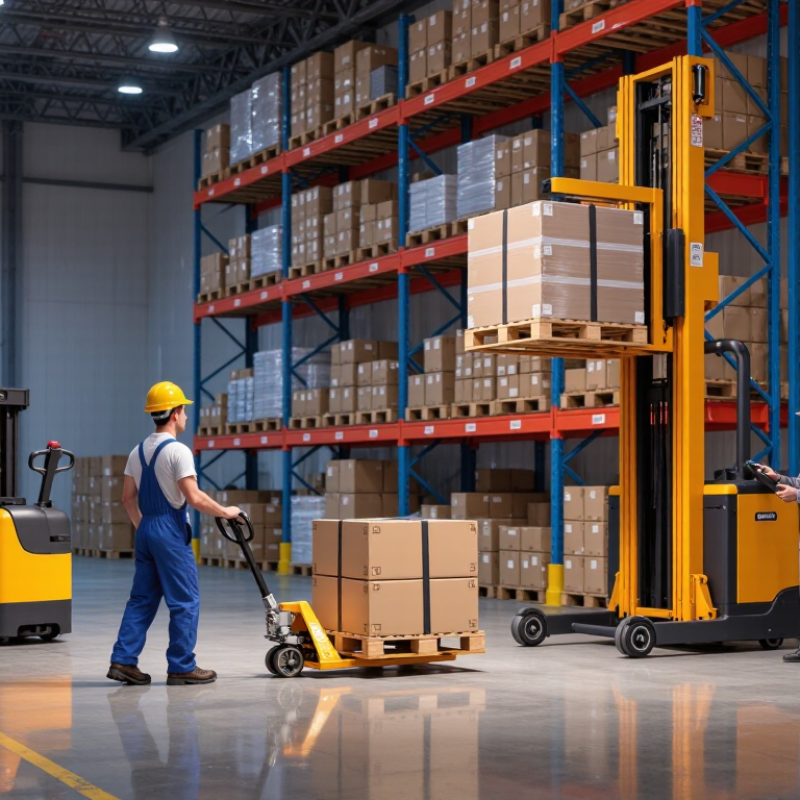
Manual and electric lifting solutions serve different working realities. Manual equipment can suit occasional lifting, short travel, and controlled loads. It often costs less and remains usable during power interruptions. Electric systems support frequent cycles, heavier loads, and precise positioning. They can reduce physical strain, but they require charging, inspections, and trained operators.
The choice should begin with the task, not the equipment catalogue. Measure load weight, lifting height, cycle frequency, aisle width, and floor condition. A worker moving a 25-kilogram crate twice daily faces a different risk from someone handling it every five minutes. The European Agency for Safety and Health at Work reported that three in five EU workers experienced musculoskeletal disorders in its 2022 review. That figure makes repetitive lifting difficult to dismiss as “normal work.” A manual trolley may still work well for light loads on smooth floors. An electric unit becomes more practical when distance, repetition, or ramp gradients increase.
Real-world observations matter. Watch operators during peak periods, not only during demonstrations. Check awkward reaches, sudden stops, and overloaded shelves. Neither option is automatically safer. That assumption deserves challenge. The U.S. Bureau of Labor Statistics recorded 1,069 fatal injuries in transportation and material-moving occupations in 2023, showing why movement controls and training matter. Electric systems can introduce battery, charging, and maintenance risks. Manual systems can encourage overexertion when output targets rise. Choose the solution that matches the actual workflow, then review injury reports, near misses, and operator feedback after installation.
| Evaluation Dimension | Manual Lifting Solutions | Electric Lifting Solutions |
|---|---|---|
| Common Examples | Hand chain hoists, lever hoists, manual winches, and hand-operated lift tables. | Electric chain hoists, wire-rope hoists, powered winches, and electric lift tables. |
| Power Source | Human effort; no electrical supply is required. | Electric motor supplied by a fixed electrical connection or battery, depending on the equipment type. |
| Typical Rated Capacity | Common portable units are often rated from approximately 250 kg to 10,000 kg; the exact limit depends on the model and lifting configuration. | Many industrial units are available from approximately 125 kg to more than 50,000 kg; capacity must be confirmed from the manufacturer's rated load data. |
| Lifting Speed | Generally slow and dependent on operator strength, gear ratio, and the distance of the lift. | Generally faster and more consistent; many electric hoists provide multiple speed settings for positioning and production work. |
| Best Operating Pattern | Occasional lifting, short-duration tasks, emergency use, and locations without reliable electrical power. | Frequent lifting, repetitive handling, high-throughput operations, and applications requiring controlled movement. |
| Operator Effort | Requires continuous manual pulling, cranking, or pumping. Physical effort increases with operating frequency and lifting duration. | Requires relatively little physical effort; the operator normally controls lifting through pendant, remote, or integrated controls. |
| Control and Positioning | Provides direct mechanical control, but fine positioning may require more time and operator coordination. | Offers consistent control and, on suitable models, variable speed, limit switches, overload protection, and remote operation. |
| Installation Requirements | Usually simple to install and can be used where electrical infrastructure is unavailable. | Requires suitable electrical capacity, wiring, controls, grounding, and a structurally adequate support system. |
| Maintenance | Typically involves inspection, lubrication, checking hooks and chains, and verifying brakes and load-bearing components. | Includes mechanical inspection plus motor, brake, electrical, control, cable, and limit-switch checks. |
| Energy and Operating Cost | Very low direct energy cost, but labor time and operator fatigue can become significant during repeated use. | Consumes electrical energy and may require more installation investment, but can reduce labor time for repetitive lifting. |
| Portability | Often compact, lightweight, and easy to move between work areas, subject to the rated capacity. | Portable battery-powered units exist, but many electric systems are heavier and depend on fixed power or installed tracks. |
| Noise and Work Environment | Usually produces limited operational noise and can be suitable for areas where electrical equipment is restricted. | Motor and gearing create operating noise; equipment must be selected for the temperature, dust, moisture, and hazardous-area conditions. |
| Safety Considerations | Use rated load limits, inspect chains and hooks, engage the brake correctly, and avoid side pulling or standing beneath suspended loads. | Requires the same lifting precautions plus electrical isolation, control inspection, overload protection, emergency-stop procedures, and authorized operation. |
| Initial Investment | Usually lower because the equipment has fewer powered components and requires less infrastructure. | Usually higher because of the motor, controls, electrical installation, support structure, and possible commissioning work. |
| Recommended Choice | Choose manual equipment when lifts are infrequent, portability is important, power is unavailable, and a lower initial cost is the priority. | Choose electric equipment when lifting is frequent or heavy, speed and repeatability matter, operator fatigue must be reduced, and suitable power and support infrastructure are available. |
Manual equipment suits occasional lifting, short travel, and controlled loads. It usually costs less and works during power interruptions. A smooth floor helps.
Electric equipment suits frequent cycles, heavier loads, ramps, and precise positioning. It reduces physical strain, but needs charging, inspections, and trained operators.
Measure load weight, dimensions, lifting height, cycle frequency, aisle width, and floor condition. Also check the load’s center of gravity.
A manual hoist may suit two lifts daily. Continuous production can make it inefficient. Electric equipment is often better for repeated cycles.
Yes. A 25-kilogram crate moved every five minutes can cause fatigue. Repetition matters as much as weight. “Normal work” can still cause injuries.
Dust, moisture, cold rooms, uneven floors, and limited headroom can change performance. Check power availability before selecting electric equipment.
No. Electric systems add battery, charging, motor, brake, and maintenance risks. Manual systems may encourage overexertion when output targets increase.
Include the maximum load, attachments, dimensions, and dynamic forces. Leave a safety margin. Choosing the smallest capacity may shorten service life.
Watch awkward reaches, sudden stops, poor visibility, and unstable movement. A calculation may look correct. Real movement can expose wrong assumptions.
Review injury reports, near misses, inspection records, and operator feedback. Check chains, hooks, brakes, and controls regularly. Reassess when conditions change.
Choosing the right lifting method begins with understanding how manual and electric solutions work in real operating environments. Manual equipment is often simple, portable, and economical for occasional lifting, while electric systems can reduce physical effort and improve productivity during frequent or repetitive tasks. The best choice depends on load capacity, lifting speed, usage frequency, available power, workspace conditions, and the level of operator control required. Understanding these factors is essential when considering how to choose between manual and electric lifting solutions.
Safety, maintenance, and total ownership costs should also guide the decision. Manual systems may have fewer mechanical and electrical components, but they still require inspections and proper handling. Electric solutions may involve higher initial costs and more maintenance, yet they can offer greater efficiency and consistent performance over time. By comparing capabilities, limitations, operating conditions, service needs, and long-term expenses, organizations can select a lifting solution that supports safe, reliable, and cost-effective operations.

 Progan Lift