Choosing the right lift can be challenging. Many people wonder, "what is the difference between a scissor lift and a boom lift?" Both options serve unique purposes in different work environments. Understanding these differences can lead to safer and more efficient operations.
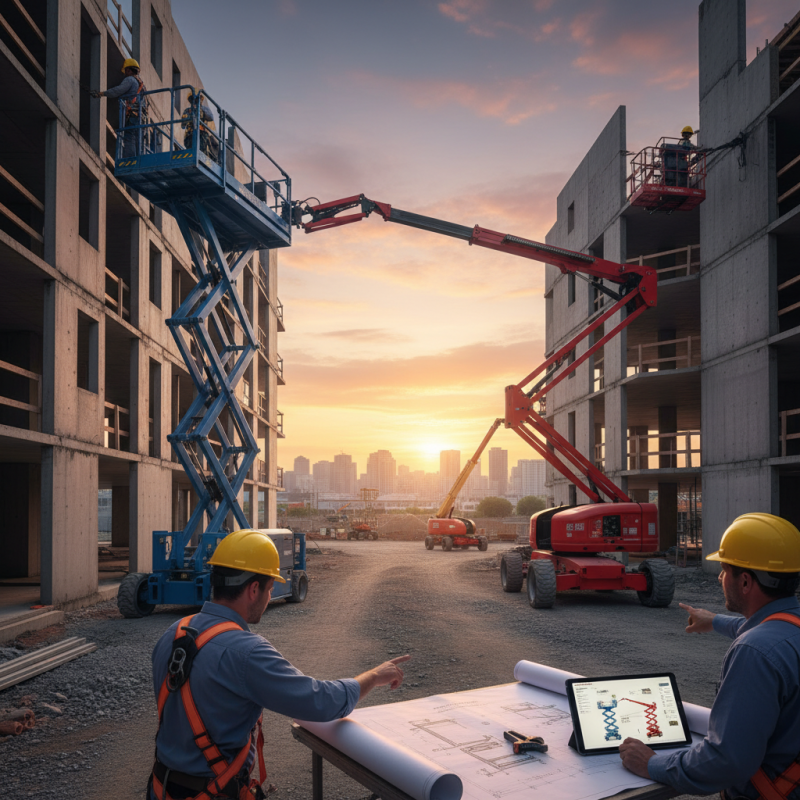
Scissor lifts are best for vertical lifting. They have a compact design and provide excellent stability. However, they lack the reach of a boom lift. On the other hand, boom lifts are versatile and can extend both vertically and horizontally. They are ideal for accessing hard-to-reach areas.
When selecting the right lift, consider your project's specific needs. Assess the height, weight capacity, and workspace. Remember that each lift has strengths and weaknesses. Taking the time to reflect on these factors can ensure you make an informed choice.
Understanding the Basics: Scissor Lifts vs. Boom Lifts
When deciding between a scissor lift and a boom lift, understanding their basic functions is crucial.
Scissor lifts offer vertical elevation. They are ideal for tasks that require working directly above.
Their compact design makes them suitable for indoor use. They generally have a heavier lifting capacity compared to boom lifts.
However, they lack horizontal reach.
Boom lifts provide flexibility in accessing difficult areas. With an extendable arm, they can reach
higher and farther than scissor lifts. This makes them favored for outdoor work. They are particularly useful for tasks on uneven terrain.
However, they can be more complex to operate. Operators need proper training to use them safely. Sometimes, workers underestimate
the importance of operator skills. This can lead to accidents and equipment damage.
Choosing the right lift depends on project specifics. Assess the
worksite environment, height requirements, and required reach. Scissor lifts excel in stable setups. Boom lifts shine in versatility. Each type has its merits and drawbacks, making it essential to evaluate them carefully.
Knowing your tasks and equipment can prevent wasted time and resources.
Assessing Your Project Needs for Height and Reach Requirements
When selecting between a scissor lift and a boom lift, understanding your project needs is crucial. Each lift type offers unique advantages based on height and reach requirements.
Scissor lifts generally provide vertical lifting capabilities. They are ideal for work in tight spaces. They can extend up to 50 feet in height. According to industry data, about 70% of aerial lift projects fall within this vertical range.
However, boom lifts offer more versatility. They can reach lofty heights and extend horizontally, making them suitable for outdoor applications. A recent report from the Aerial Industry Association states that boom lifts account for about 30% of all aerial lift rentals. Their ability to access hard-to-reach areas makes them valuable for construction and maintenance tasks.
It's vital to consider the work environment. Scissor lifts excel on flat surfaces, while boom lifts navigate varied terrain. Evaluating the requirements of your project can lead to cost savings. Choosing the wrong lift can result in inefficiencies or safety hazards.
Balancing height and reach needs will ensure optimal performance and safety on the job site. Emphasizing the importance of assessing specific project conditions can enhance lift selection.
Evaluating Ground Conditions and Terrain for Lift Operations
When choosing between a scissor lift and a boom lift, ground conditions and terrain play a crucial role. According to industry reports, over 30% of lift accidents happen due to inadequate assessment of the work area. Ground stability is essential. Scissor lifts operate best on level and solid surfaces. They struggle on soft or uneven terrain, risking tip-overs. Conversely, boom lifts offer greater versatility. They can navigate rougher ground conditions while providing extended reach.
Weather can also affect operations. Rain-soaked or muddy conditions can compromise safety and efficiency. Approximately 40% of operators reported delays related to adverse weather conditions impacting lift performance. Understanding local topography is critical. Steep grades, hillside projects, or sites with obstacles require careful planning. Ensuring proper inspections and site evaluations are necessary steps. Inadequate preparation can lead to increased costs and extended project timelines.
Operator experience is another factor. Proper training on equipment and safety protocols is vital. Yet, data shows that around 25% of lift operators feel untrained for challenging environments. Continuous education helps mitigate risks associated with terrain variability. So, evaluating ground conditions remains a key to choosing the right lift, ensuring both safety and efficiency in lift operations.
Comparing Safety Features and Operational Training for Lift Types
When considering scissor lifts and boom lifts, safety features play a vital role. Scissor lifts offer stability on flat surfaces. They are ideal for indoor projects. However, their vertical reach is limited. Operators need to be aware of weight capacities. Overloading can lead to accidents. Regular inspections are essential for safe operation.
Boom lifts provide versatility. They can navigate rough terrain and reach greater heights. This makes them suitable for outdoor tasks. However, they can be more complex to operate. Training for boom lift operators should include hazard awareness. Understanding the machine's dynamics is crucial. A lack of training can lead to serious accidents.
Operational training should never be overlooked. Both lift types require operators to be certified. Familiarity with emergency protocols is key. Scissor lift training can be simpler, focusing on stability. Conversely, boom lift training deals with movement and positioning. Continuous education helps ensure safety. Operators must engage in regular skill refreshers to stay sharp.
Budget Considerations: Cost of Rental vs. Purchase of Lifts
When deciding between renting or purchasing scissor lifts and boom lifts, budget considerations play a crucial role. Rental costs for lifts can vary significantly.
On average, renting a scissor lift can range from $150 to $400 per day,
while boom lifts often rent for $200 to $600 each day. For long-term projects, these daily costs can quickly accumulate, indicating that purchasing might be more cost-effective in some cases.
A report by the American Rental Association highlights that about 60% of companies opt for rental options, primarily due to cash flow constraints. However,
the initial investment for a lift can be substantial. Purchasing a scissor lift can cost between $15,000 and $30,000, whereas boom lifts can range from $25,000 to $60,000.
Companies need to consider usage frequency and maintenance costs when weighing these options.
Moreover, newer lifts tend to have better fuel efficiency and reduced operational costs. Some owners might overlook ongoing expenses, such as upkeep and insurance.
It’s critical to evaluate how often the lift will be used and calculate the total cost of ownership.
Each decision comes with its own set of financial implications, and no choice is without potential downsides. Reflecting on long-term needs versus immediate costs can lead to more informed decisions.
FAQS
: Ground conditions and terrain play a crucial role in lift operations. Stability is essential for safety.
Adverse weather, like rain, can delay operations. Around 40% of operators reported weather-related inefficiencies.
Training ensures operators understand equipment dynamics. Many operators feel unprepared for challenging environments.
Scissor lifts are stable on flat surfaces and ideal for indoor use. However, they have limited vertical reach.
Yes, boom lifts can navigate rough terrain and reach higher. They require more complex operation and training.
Companies should weigh rental costs against purchase prices. Maintenance and usage frequency are important.
Renting a scissor lift typically costs between $150 and $400 per day, depending on the duration.
A scissor lift can cost between $15,000 and $30,000. Boom lifts range from $25,000 to $60,000.
Owners must consider upkeep and insurance. These costs can significantly affect overall budget decisions.
Careful planning is necessary for local topography. Inadequate preparation can lead to increased costs and delays.
Conclusion
When choosing between a scissor lift and a boom lift, it's essential to understand what is the difference between a scissor lift and a boom lift. Scissor lifts provide vertical lifting and are ideal for projects requiring height but limited horizontal reach, making them suitable for tasks like painting or maintenance within buildings. In contrast, boom lifts offer both height and horizontal outreach, making them perfect for accessing hard-to-reach areas, such as over obstacles or on construction sites with varied terrain.
Assessing your project needs, including height and reach requirements, is crucial in making the right choice. Additionally, evaluating ground conditions and terrain for lift operations can significantly affect lift performance. Safety features and operational training must also be considered, as different lifts require different operating protocols. Finally, budget considerations, including the cost of rental versus purchase, play a vital role in the decision-making process.

 Progan Lift