China’s top warehouse lifts are changing how facilities move pallets, cartons, and people through limited vertical space. Yet equipment alone cannot optimize every operation. The real question is how to optimize warehouse workflow with lifts while protecting safety, accuracy, and delivery speed.
A useful principle comes from quality-management expert W. Edwards Deming: “A bad system will beat a good person every time.” His observation applies directly to lift planning. A fast lift cannot fix poor slotting, unclear routes, or inconsistent loading rules. Managers should map each movement, from receiving dock to storage rack and dispatch area. Then, they can measure waiting time, travel distance, loading cycles, and picking errors.
Small details matter. A lift positioned near high-turnover inventory may reduce walking and forklift traffic. Clearly marked entry zones can prevent awkward crossings. Routine inspections also support dependable daily performance. Operators need practical training, not only a manual.
But no layout is perfect.
Seasonal demand may change the best lift location. A design that works in January may create congestion before major sales events. Teams should review data weekly and invite operator feedback. Their comments often reveal delays that dashboards miss. Some facilities may also overinvest in lifting speed while ignoring aisle width or battery charging space. That is a costly assumption.
This guide examines lift selection, traffic planning, maintenance, and workflow measurement. It focuses on realistic improvements for Chinese warehouse environments. The goal is not simply faster vertical movement. It is a safer, clearer, and more resilient operation.
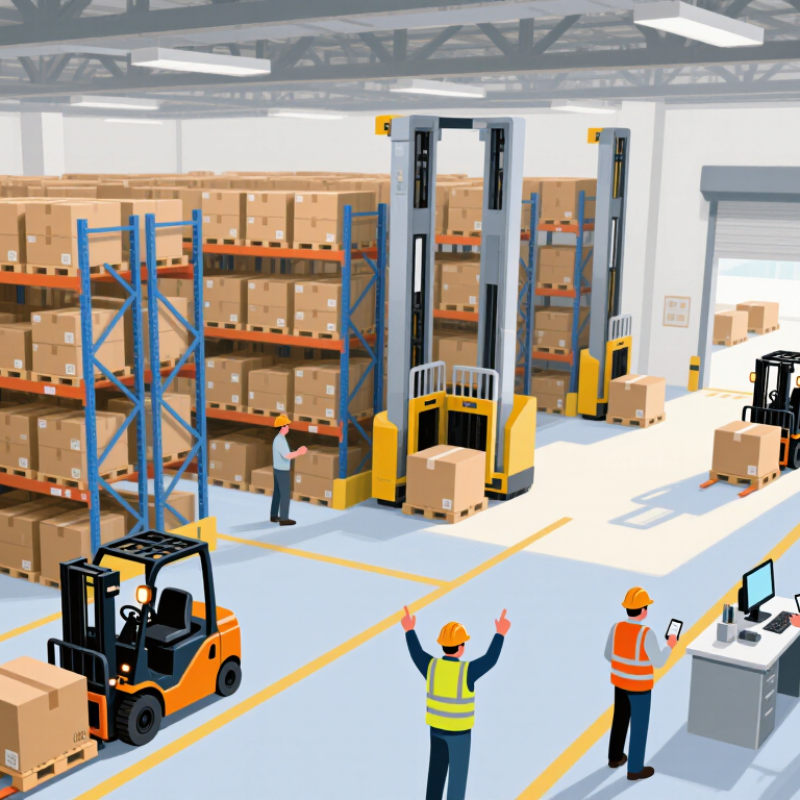
China’s top warehouse lifts should be classified by three practical measures: load, lift height, and duty cycle. Light-duty electric stackers suit cartons and pallets below 1,000 kilograms. Medium-duty counterbalance lifts often handle 1,500–3,000 kilograms. Heavy-duty models require reinforced masts, wider aisles, and carefully verified floor capacity.
Height changes the decision. Low-level lifts support fast order picking, while reach trucks serve narrow aisles and storage above 8 meters. High lifts need precise mast control and stable pallet placement.
OSHA guidance stresses rated capacity, load-center distance, and operator training. Its widely cited data reports about 35,000 serious forklift injuries and 85 fatalities annually in the United States. These figures expose a common mistake: selecting by maximum weight alone.
Tips: Record each lift’s average load, peak load, daily operating hours, and rack height. Match the lift to the busiest shift, not the quietest one.
The 2024 MHI Annual Industry Report shows continuing investment in warehouse automation, but budget pressure still affects equipment choices. Therefore, duty cycle matters.
Occasional use may justify a simpler electric lift. Multi-shift operation needs battery planning, cooling capacity, and stronger service support.
A perfect classification is impossible. Real warehouse traffic changes weekly, so review the data after installation.
China Top Warehouse Lifts: How to Optimize Workflow?
Order picking can consume about 55% of warehouse labor, according to widely cited warehouse engineering benchmarks. Travel often creates the hidden loss. A picker may walk 8 kilometers daily, passing slow-moving stock and crowded aisles. ABC slotting reduces this waste by placing high-frequency items closest to packing stations. WERC’s DC Measures benchmarking reports also emphasizes travel, labor productivity, and order accuracy as core warehouse performance indicators.
Build the slotting plan from actual order history, not assumptions. Classify items by pick frequency, handling difficulty, and demand stability. Place A-items between waist and shoulder height. Keep them near the shortest routes. Store B-items farther away, while C-items can use higher or less accessible locations. Small changes matter. A lift system can then replenish upper levels without interrupting active picking lanes.
Review the layout every month. Seasonal demand can quickly make an old ABC map unreliable. Track lines picked per labor hour, average walking distance, replenishment interruptions, and mis-picks. MHI’s Annual Industry Report consistently identifies labor availability and productivity as major warehouse concerns, supporting regular process measurement. The method is useful, but not perfect. A heavy A-item may slow every movement if its location ignores weight, packaging, or congestion. Test one zone first, compare results, and adjust before expanding.
ABC slotting places high-frequency A items closest to the packing and dispatch area. In this operational planning benchmark, reducing picker travel from 55% to 35% of labor time increases the share of productive picking time and supports a more efficient warehouse workflow.
Efficient warehouse lifting starts with real load data, not average estimates. Record pallet weight, dimensions, load center, lifting height, and daily movement volume. A 1,500-kilogram pallet may require more capacity at upper rack levels. Residual capacity can decrease as lift height increases. Leave a site-specific safety margin for uneven loading and unexpected weight changes.
Aisle width must match the lift’s turning radius, pallet length, and rack layout. Narrow aisles may save floor space, but they can slow turning and increase correction movements. Measure actual travel paths, including staging areas and cross-aisles. Then compare them with peak hourly throughput. A lift that moves quickly in open space may perform poorly near congested rack ends. Small delays multiply during busy shifts.
Tips: Test one aisle with a loaded unit before changing the full layout. Track moves per hour, waiting time, battery changes, and damaged pallet edges. Speak with operators; their feedback often reveals hidden bottlenecks. Do not trust a clean spreadsheet alone. Real traffic is messier. Recheck the design after seasonal demand changes.
Forklift speed can improve warehouse flow, but uncontrolled movement creates serious exposure. OSHA reports about 85 forklift-related fatalities and 34,900 serious injuries each year in the United States. These figures make risk control more than a productivity issue. It is an operational responsibility.
A safer workflow starts with separated pedestrian lanes, visible floor markings, and controlled crossing points. Supervisors should inspect brakes, forks, tires, alarms, and steering before every shift.
Operators need practical training, not only a signed attendance sheet. OSHA’s Powered Industrial Trucks standard, 29 CFR 1910.178, requires employer-managed training and operator evaluation. Refreshers are necessary after unsafe operation, workplace changes, or a long absence.
Keep loads low and stable during travel. Do not allow blocked sightlines or hurried turns near storage racks. Data from the National Institute for Occupational Safety and Health also links powered industrial truck incidents with struck-by and tip-over hazards. Small layout changes can reduce these risks. For example, placing fast-moving goods near dispatch may shorten travel distance, but it can also increase pedestrian conflict.
A completed form does not prove safe behavior. Managers should observe real routes, review near-miss reports, and question repeated congestion. Basic lift metrics, such as travel time and collision alerts, can expose weak points. The uncomfortable finding may be that workflow pressure encourages shortcuts. That weakness deserves attention.
Picks per hour shows how efficiently a lift supports order fulfillment. Track completed picks against active operating time, not the entire shift. For example, 420 picks during seven working hours equals 60 picks per hour. Record travel, waiting, charging, and replenishment separately. These details expose hidden delays. A lift may appear busy while spending ten minutes near an empty pallet location.
Lift utilization adds another useful view. Measure productive lift time against scheduled availability. Include travel, load handling, and positioning, but exclude avoidable idle periods. A practical dashboard can compare utilization by shift, zone, operator, and task type. If a lift runs 310 minutes during a 480-minute shift, utilization is 64.6 percent. This figure needs context. High utilization can still indicate congestion or poor task assignment.
Our early measurements looked impressive, but the data was not clean. Operators sometimes left lifts powered on during breaks, inflating utilization. We corrected the records through spot checks and time-stamped activity logs. Small errors matter. Managers should review picks per hour beside safety observations, equipment condition, and order accuracy. A faster process is not better if pallets arrive damaged or workers wait at narrow aisles. Test one workflow change for a week, then compare the same measures across similar shifts. Retraining may help, although layout changes sometimes produce larger gains.
ABC slotting places frequently picked items near packing stations. It reduces unnecessary walking and aisle congestion.
Picking can consume about 55% of warehouse labor. A picker may walk eight kilometers daily, wasting valuable time.
Use actual order history. Consider pick frequency, handling difficulty, demand stability, weight, and packaging.
Keep A-items near short routes, between waist and shoulder height. Avoid locations that create lifting strain or congestion.
Use lift equipment for replenishment. Keep active picking lanes clear during restocking.
Review it monthly. Seasonal demand can make an old slotting map unreliable.
Track lines picked per labor hour, walking distance, replenishment interruptions, and picking errors. One metric is not enough.
Separate pedestrian lanes with clear markings and controlled crossings. Inspect brakes, forks, tires, alarms, and steering before each shift.
Operators need practical instruction and regular evaluation. A signed form alone does not prove safe behavior.
Yes. Fast-moving goods near dispatch may increase pedestrian conflicts. Test one zone, observe real routes, and adjust carefully. Perfect planning is unlikely.
Optimizing warehouse workflow with lifts begins with matching equipment to the operation. Classify warehouse lifts by load capacity, lifting height, and duty cycle, then compare these factors with actual throughput, pallet weights, and working hours. A lift that is too small may slow operations and create safety concerns, while oversized equipment can reduce aisle space and increase unnecessary costs. Selecting suitable aisle widths and lift capacities helps maintain smooth movement and reliable handling performance.
To understand how to optimize warehouse workflow with lifts, use ABC slotting to place high-demand products closer to picking and dispatch areas, reducing travel time that can account for up to 55% of labor. Establish clear operating procedures, inspect equipment regularly, and train operators to control risks associated with forklift use, including the OSHA-reported 85 fatalities and 34,900 injuries. Finally, measure improvement through picks per hour, travel distance, downtime, and lift utilization to continuously refine workflow efficiency.

Progan Lift