In busy warehouses, lifting equipment turns storage space into workable capacity. Forklifts move pallets from inbound docks to racking. Hoists position heavy components with controlled accuracy. Cranes support loading, assembly, and container handling where manual movement would create serious strain.
So, what is the role of lifting equipment in logistics operations? It connects speed, safety, and material flow. Equipment reduces unnecessary handling between receiving, storage, picking, and dispatch. It also helps operators maintain consistent pallet heights, clear aisle access, and predictable loading times. These details matter when one delayed truck can disrupt several delivery routes.
The MHI Annual Industry Report 2024 states that 55% of supply chain professionals plan to increase technology investment. That direction includes automation, connected equipment, and smarter warehouse controls. The report also highlights ongoing labor and efficiency pressures across supply chains. Lifting equipment is part of this response, but it is not a complete solution. Poorly trained operators, weak maintenance routines, or unsuitable attachments can still cause delays and damage.
The World Bank’s Logistics Performance Index 2023 links reliable logistics with dependable infrastructure, service quality, and shipment timing. Equipment selection supports these outcomes at ground level. A well-maintained reach truck can place a pallet safely at height. A calibrated hoist can prevent product deformation during transfer.
Yet, real facilities are rarely perfect. Space constraints, uneven floors, and changing order volumes complicate decisions. Therefore, responsible logistics planning should match equipment capacity with actual workflows, operator experience, maintenance records, and measurable safety goals.
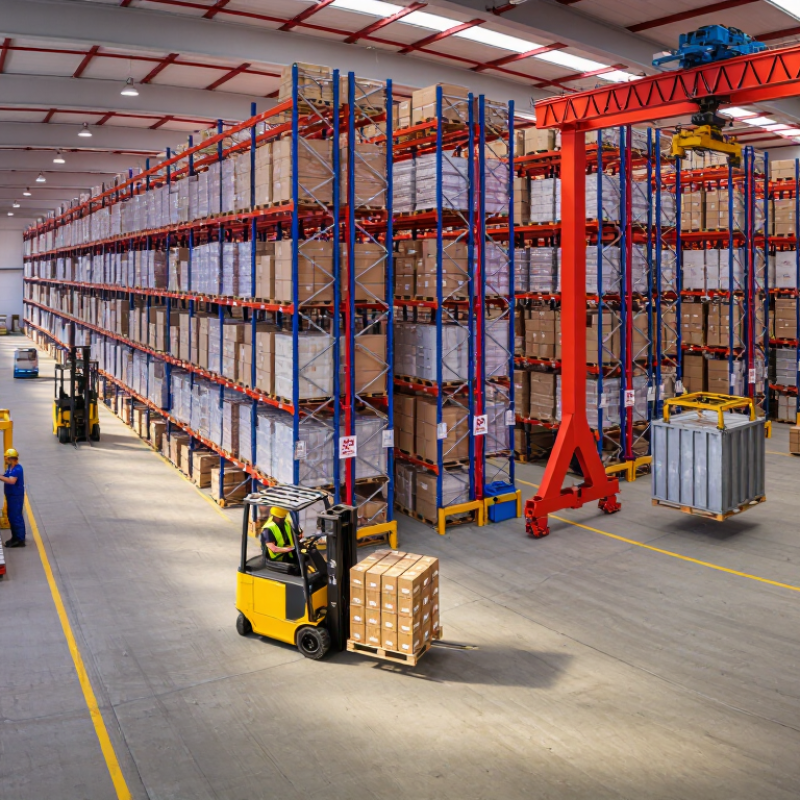
Lifting equipment in logistics includes forklifts, pallet stackers, hoists, cranes, dock lifts, and powered pallet trucks. These machines raise, lower, move, or position goods safely across warehouses and distribution centers. A forklift can place a pallet on a high rack, while a dock lift bridges different loading heights. Smaller equipment supports short movements near picking areas. It is not one machine.
Equipment selection depends on load weight, lifting height, aisle width, floor condition, and handling frequency. A 1,000-kilogram pallet requires different controls than a fragile carton cage. Operators also need clear visibility, stable loads, and planned travel routes.
OSHA reports that powered industrial trucks cause about 85 workplace deaths and 34,900 serious injuries annually in the United States. That figure makes capacity checks and operator training practical necessities, not paperwork. Safety comes first.
Modern logistics teams increasingly connect lifting equipment with sensors, maintenance systems, and warehouse software. The MHI 2024 Annual Industry Report, based on responses from more than 2,000 supply-chain professionals, identifies automation and robotics as important investment areas. However, automation does not remove every risk. Poorly positioned pallets still fall. Batteries still need inspection. A common mistake is choosing equipment from average loads rather than the heaviest realistic load. That shortcut deserves reconsideration. Supervisors should record load dimensions, travel patterns, near misses, and maintenance findings before changing equipment or workflows.
Forklifts move pallets across warehouses and loading areas. Pallet jacks handle lighter loads over short distances. Reach trucks serve narrow aisles and tall racks. Stackers lift pallets to moderate heights. Cranes and hoists handle heavier machinery or steel coils.
A pallet jack suits short movements across crowded docks. It needs less space and simpler handling. A large truck may create unnecessary congestion. That choice can still be wrong if the load is too heavy.
Reach trucks are designed for narrow aisles and elevated storage. Measure aisle width before purchasing powered equipment. A machine may fit the pallet but block turning space. We often overlook that detail.
Cranes and hoists support machinery, steel coils, and packed production equipment. Overhead cranes reduce floor congestion. Mobile cranes provide flexibility around outdoor work areas. Confirm the rated capacity before lifting.
Consider load weight, size, shape, height, travel distance, and lifting frequency. Check floor condition, temperature, aisle width, and available space. Do not rely only on average load weight. Unexpected weight matters.
Operators should inspect equipment before every shift. Check forks, chains, hydraulics, controls, and visible damage. Keep loads low during travel. Never exceed the marked capacity. Small errors can become sudden problems.
Training should cover load balance, visibility limits, pedestrian awareness, and emergency stopping. Operators need authorization for the equipment they use. Practical training should include real pallets and tight corners. Classroom knowledge is not always enough.
Use barriers where people and machines share routes. Keep travel paths clear and visibly marked. Automated vehicles still need supervision and open routes. Automation cannot repair poor warehouse planning.
Review procedures after layout, workload, or equipment changes. Keep emergency instructions visible and practice them regularly. Old procedures may no longer match current risks. That deserves honest review.
Lifting equipment in logistics refers to the machines and tools used to raise, lower, move, and position goods safely and efficiently. Common examples include forklifts, pallet trucks, hoists, cranes, conveyors, and automated lifting systems. These solutions help logistics teams handle heavy, oversized, or palletized materials while reducing manual effort, improving workflow speed, and supporting better space utilization. Understanding what is the role of lifting equipment in logistics operations helps businesses connect equipment selection with productivity, safety, and overall supply chain performance.
Across the supply chain, lifting equipment is used during receiving, storage, order picking, loading, unloading, cross-docking, and delivery preparation. Its effective use depends on factors such as load capacity, lifting height, operating environment, power source, maneuverability, maintenance needs, and worker training. Safety procedures, regular inspections, clear operating instructions, and suitable protective measures are essential for preventing accidents and product damage. By selecting equipment that matches specific material-handling requirements, logistics operations can become more reliable, organized, and cost-effective.

 Progan Lift