Top Tips for Choosing the Right Scissor Lift for Warehouses?

Time:2026-04-02 Author:Madeline
0%

When it comes to warehouse operations, selecting the right equipment is crucial. One essential tool is the scissor lift. Choosing the correct scissor lift can significantly boost efficiency and safety. However, many warehouse managers struggle with the decision-making process. Understanding how to choose the right scissor lift for warehouse use is vital.

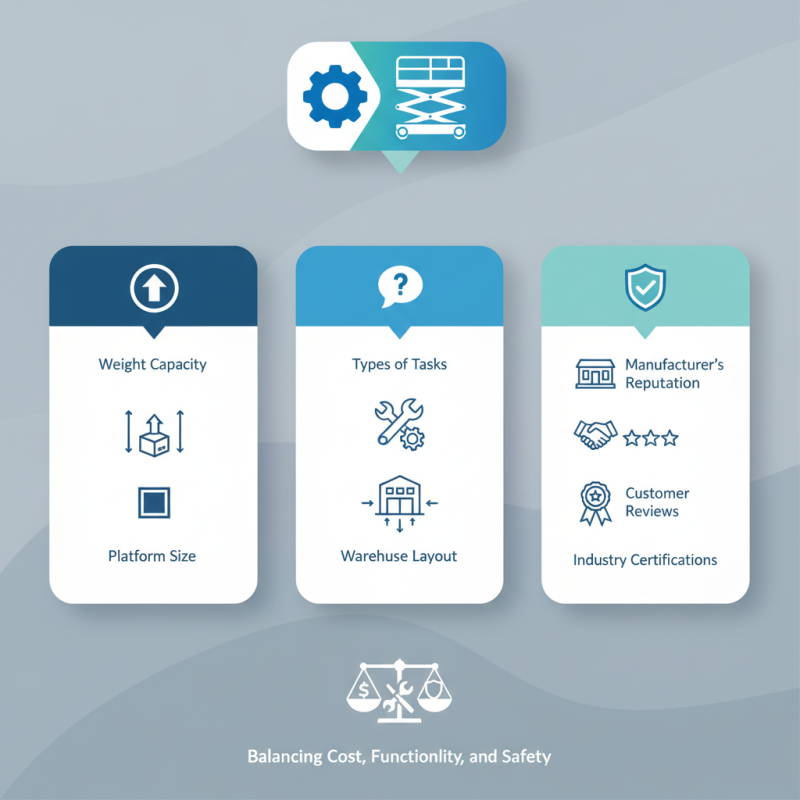
Consider factors such as weight capacity, lift height, and platform size. Each warehouse has unique requirements. A one-size-fits-all solution rarely meets specific needs. It’s important to assess the types of tasks frequently performed. Reflect on the layout of the warehouse and access points. These details can significantly influence your choice.

Additionally, it’s wise to evaluate the manufacturer’s reputation. Trustworthy brands often provide better support and longevity. Look for customer reviews and industry certifications. Yet, even the best brands might not meet every need. A thorough understanding of operational demands makes a difference. Balancing cost, functionality, and safety ensures a smart investment. Take the time to reflect on these factors for an informed decision.
Top Tips for Choosing the Right Scissor Lift for Warehouses?

Understanding the Different Types of Scissor Lifts for Warehouse Use

When selecting a scissor lift for warehouse operations, it's crucial to understand the different types available. Electric scissor lifts are popular for indoor use. They offer quieter operation and zero emissions, making them ideal for sensitive environments. These lifts easily navigate tight spaces, allowing for efficient vertical movement. A capacity of around 500-1000 pounds meets most warehouse needs.

On the other hand, rough terrain scissor lifts are designed for outdoor use. They feature larger tires and higher ground clearance, suitable for uneven surfaces. These models may carry heavier loads but require more space to maneuver. In some cases, the choice depends on your warehouse layout. Think about storage height and the weight of materials handled.

Mechanical issues can arise with both types. Regular maintenance is key to reliability. Consider your team’s expertise with machinery. Some may require training to ensure safe operation. It's essential to balance the benefits against potential risks. Each lift type has its strengths and weaknesses. Reflecting on your specific needs can guide you to the right choice.

Key Specifications to Consider When Selecting a Scissor Lift

When selecting a scissor lift for warehouse operations, key specifications must top your list. The lift’s load capacity is crucial. Most warehouses handle heavy materials, so a standard capacity of 2,500 to 4,000 pounds is often required. In fact, up to 60% of operational delays stem from using inadequate lifting equipment. Choosing the right capacity prevents accidents and inefficiencies.

Next, consider the working height. A scissor lift should provide a platform height of at least 20 feet for most warehouse tasks. Reports indicate that nearly 30% of accidents occur due to improper height selection. An optimal height not only boosts productivity but also enhances overall safety. Evaluate the specific tasks your warehouse faces; this will guide you in making an informed decision.

Don't overlook power source options. Scissor lifts are available in electric and diesel models. Electric lifts are quieter and suitable for indoor use, while diesel models are better for outdoor tasks. According to industry experts, about 70% of lifts utilized in warehouses are now electric, reflecting a shift towards environmentally friendly solutions. Ensure the lift matches your operational needs and warehouse layout for maximum efficiency.

Top Tips for Choosing the Right Scissor Lift for Warehouses

Industry Standards and Safety Regulations for Scissor Lifts

When selecting a scissor lift for warehouse operations, adherence to industry standards and safety regulations is crucial. The Occupational Safety and Health Administration (OSHA) outlines essential guidelines for lifting equipment. Understanding these regulations helps ensure employee safety and operational efficiency. Regular training on safety protocols is also vital. Employees must be aware of potential hazards associated with scissor lifts.

The American National Standards Institute (ANSI) sets additional standards that must be considered. These include load capacities, stability requirements, and inspection protocols. Regular inspections can pinpoint potential issues before they become significant problems. Lack of compliance with these standards can lead to accidents and costly downtime.

Consider the specific needs of your warehouse. The right scissor lift should be chosen based on operational space and load types. Often, facilities overlook the importance of proper planning and risk assessment. These oversights can lead to choosing inadequate equipment. Always involve your team in discussions to evaluate operational needs critically. Engaging with employees can also foster a safety culture within the organization.

Analyzing Load Capacity Requirements for Efficient Warehouse Operations

When evaluating load capacity for scissor lifts in warehouses, understanding specific needs is crucial. Each operation has unique requirements based on the items stored. A thorough assessment should start with analyzing the weight and volume of the materials. Heavy or bulky objects demand higher load capacities. Underestimating these requirements can lead to serious safety risks.

Furthermore, considering the lift's maximum height is essential. Many warehouses need to access tall storage racks. Choosing a lift that can handle both height and weight is vital. Inspecting the lift's stability and safety features adds another layer of reliability. A poorly chosen lift may not only perform inefficiently but can cause accidents.

Lastly, reflecting on past experiences can provide deeper insights. If a lift has struggled with heavy loads before, it’s a sign to reconsider the selection. Regularly review performance data to ensure you are meeting operational demands effectively. This ensures your equipment consistently supports your team's productivity and safety.

Evaluating Maintenance Needs and Operational Costs of Scissor Lifts

When selecting a scissor lift for your warehouse, understanding maintenance needs and operational costs is crucial. Regular maintenance ensures reliability and longevity. Skipping scheduled servicing might save money initially but can lead to costly repairs later. It's vital to gauge how many hours the lift will be used and factor in potential downtime for maintenance.

Tip: Always check manufacturer guidelines for maintenance intervals. Keeping records helps track service history. Evaluate common wear parts like hydraulic fluids and batteries; these are essential for smooth operation.

Consider operational costs beyond just the initial purchase price. Fuel consumption, electricity use, and potential breakdowns should be part of your calculations. If your lift is used for heavy loads, the costs can increase significantly.

Tip: Analyze your lift's load capacity. Overloading can decrease efficiency and increase wear, leading to higher operational costs. A careful review of expected usage patterns can aid in selecting the lift that best fits your warehouse needs.

FAQS

: What is the important load capacity range for scissor lifts in warehouses?

: Most warehouses require a load capacity between 2,500 and 4,000 pounds.

Why is selecting the correct working height crucial?

A platform height of at least 20 feet is needed to avoid accidents and enhance productivity.

What power source options are available for scissor lifts?

You can choose between electric and diesel models depending on indoor or outdoor usage.

How do industry standards impact scissor lift selection?

Compliance with OSHA and ANSI guidelines ensures safety and operational efficiency in workplaces.

Why should facility needs be assessed before choosing a scissor lift?

Failing to evaluate specific operations can lead to selecting inadequate equipment, increasing risks.

How can employee training improve safety with scissor lifts?

Regular training on safety protocols raises awareness of potential hazards associated with lifts.

What role does load capacity play in preventing operational delays?

Inadequate lifting equipment causes about 60% of operational delays, emphasizing the need for suitable capacity.

How should past experiences influence future scissor lift choices?

Reviewing past lift performance can reveal needs for better capacity or stability for safe operations.

Why is stability an important consideration for scissor lifts?

A stable lift ensures safe operation, avoiding accidents that could arise from poor equipment choices.

Conclusion

Choosing the right scissor lift for warehouse use involves understanding various types available to meet specific operational needs. Different models have unique features, and it’s crucial to match these with the tasks at hand. Key specifications such as weight capacity, platform height, and overall dimensions significantly influence selection. Additionally, consideration of industry standards and safety regulations ensures compliance and enhances worker safety.

When evaluating how to choose the right scissor lift for warehouse use, it is important to analyze load capacity requirements to ensure efficient operations. Furthermore, maintenance needs and operational costs should be factored in, as they impact the long-term viability of the lift in daily operations. By addressing these critical aspects, warehouses can optimize their workflow and enhance productivity.

Madeline

Madeline

Madeline is a dedicated marketing professional with a wealth of expertise in our company's core offerings. With a keen understanding of the industry, she brings a unique perspective to her role, consistently delivering high-quality content that highlights the superior aspects of our products. As......