Top 10 Ways to Train Warehouse Lifting Equipment Operators?

Time:2026-09-30 Author:Charlotte
0%

Warehouse lifting equipment can move heavy loads through tight aisles, but safe operation depends on more than knowing which lever to pull. Operators need practical skills, sound judgment, and time to understand the equipment they use. A rushed explanation beside a busy loading bay rarely provides enough preparation.

This guide explores how to train operators for warehouse lifting equipment, from equipment familiarization and supervised practice to hazard recognition and refresher coaching. Training should reflect real tasks: checking forks before use, turning carefully near rack ends, and keeping loads stable on uneven floors. Trainers can demonstrate each step, then watch operators repeat it and explain their decisions. That matters.

A written checklist is useful, but it cannot replace careful observation. One operator may need more practice judging load balance; another may need help spotting pedestrians around blind corners. Training records, clear feedback, and periodic reviews help supervisors see where confidence exceeds skill. Even experienced workers can develop shortcuts. That deserves attention.

The ten approaches in this outline offer a structured starting point, not a universal script. Equipment models, warehouse layouts, and job duties vary, so training should match the actual workplace and applicable safety requirements. When in doubt, pause and reassess. A safe operator is not simply fast; they know when to stop, ask, and correct a risky setup.
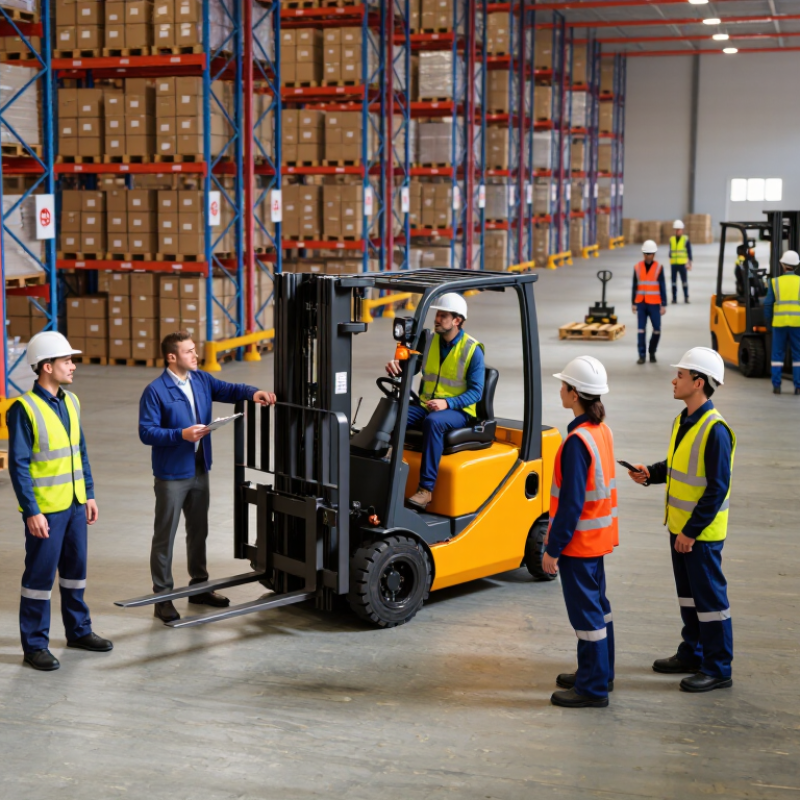
Top 10 Ways to Train Warehouse Lifting Equipment Operators?

Assess Operator Readiness and Identify Training Needs

Assessing operator readiness should come before assigning a lifting task. A certificate alone proves limited ability. OSHA requires employers to train and evaluate powered industrial truck operators before independent work. OSHA also estimates that forklifts cause about 35,000 serious injuries and 62,000 non-serious injuries each year. These figures make practical assessment essential.

Watch the operator complete a pre-shift inspection, travel with a clear view, position forks correctly, and place a load on a marked rack. Record small warning signs, such as sharp turns, raised forks during travel, or hesitation near pedestrians. Ask short questions about load capacity, stability, battery charging, and emergency actions. NIOSH identifies vehicle overturns as a leading cause of forklift fatalities, so stability knowledge deserves special attention. A written test alone is not enough. A confident operator may still make unsafe choices under pressure.

Tips: Use a three-part check: knowledge, observation, and hands-on performance. Repeat the evaluation after a near miss, equipment change, unsafe behavior, or long absence. Keep results specific, not vague. “Needs better awareness” helps nobody. Write: “Stopped 30 centimeters beyond the line twice.” Training should then target that gap. It is tempting to pass experienced workers quickly, but experience can create blind spots. Even a well-designed assessment may miss fatigue, stress, or production pressure. Supervisors should watch real work periodically, not only test-day performance.

Teach Warehouse Safety Rules and Equipment Fundamentals

Warehouse lifting equipment training should begin with safety rules, not speed. Operators need to understand pedestrian lanes, restricted areas, warning signals, and emergency procedures. A clear rule matters: never carry a load that blocks forward visibility. Stop and look.

During practical instruction, explain the equipment’s basic controls before raising any load. Show how steering, braking, lifting, lowering, and parking systems respond. Operators should inspect forks, wheels, warning devices, fluid levels, and visible damage before each shift. They must also read the load chart and identify the load’s center of gravity. A heavy pallet placed too high can make stable equipment dangerous. Small errors matter.

Experienced trainers can demonstrate safe turns using cones, empty pallets, and marked floor zones. New operators should practice slowly, then repeat tasks under observation. Supervisors need to correct unsafe habits immediately, including sharp turns, elevated travel, and distracted driving. I have found that workers remember specific examples better than long lectures. Still, no lesson is perfect. Some operators rush when production pressure rises, so refresher training should include realistic interruptions and changing floor conditions. Encourage workers to report damaged equipment and unclear routes without fear of blame. Reliable training depends on honest feedback, documented checks, and instructors who follow the same rules they teach.

Demonstrate Safe, Equipment-Specific Operating Procedures

Training warehouse lifting equipment operators should begin with the exact machine they will use, not a generic slide deck. A pallet truck, counterbalanced truck, and order picker respond differently under load. Trainers should demonstrate the operator’s position, control movements, steering limits, braking distance, and approved load capacity. Show each procedure beside the equipment. Let trainees identify the data plate and compare it with a real pallet. Small errors become serious near storage racks. Keep hands, feet, and clothing inside designated areas. Never carry passengers or lift unstable loads. Good training is visible and repeatable.

Use a controlled practice route with marked aisles, a low training load, and a clear exclusion zone. Demonstrate pre-use checks, horn use at blind corners, smooth turning, safe travel speed, and parking with forks lowered. Explain what changes on ramps, wet floors, uneven surfaces, or limited-visibility routes. The operator should stop when the load blocks the view. Then use an approved travel direction or trained spotter. An instructor should observe several cycles, not one successful attempt. I have seen confident operators rush after a clean first run. That confidence needs testing.

Tips: Ask trainees to explain each control before moving. Practice emergency stopping with no load nearby. Check clearance above, below, and beside the equipment. Require a clear hand signal system between operators and spotters. Record weak points, even when the trainee feels embarrassed. Refresher training should follow any near miss, equipment change, or repeated error. Keep the lesson practical. Warehouses rarely look as tidy as training areas.

Develop Skills Through Supervised Hands-On Practice

Develop Skills Through Supervised Hands-On Practice

Classroom instruction explains controls, stability, and load capacity. Real competence develops when operators practise under direct supervision. OSHA estimates that powered industrial trucks cause about 85 workplace deaths and 34,900 serious injuries annually in the United States. These figures show why practical training cannot be treated as a short demonstration.

A qualified trainer should guide operators through pre-use inspections, smooth starts, controlled turns, and accurate parking. The practice area should include cones, narrow aisles, uneven surfaces, and marked pedestrian crossings. Operators should lift realistic loads, check visibility, and keep forks at a safe travel height. The trainer must correct unsafe habits immediately, not after the shift. OSHA’s training requirements include practical exercises and workplace performance evaluations. Re-evaluation is required at least every three years, or sooner after unsafe operation, an accident, or major equipment changes.

Tips: Use a simple scoring sheet. Record steering control, load balance, horn use, and pedestrian awareness. Let trainees explain their decisions aloud. This exposes confusion early. Rotate scenarios, but avoid rushing the session. A quiet operator may still be guessing. Supervisors should ask for a second attempt, because one successful lift proves very little. Training records should include the equipment type, trainer’s name, date, and observed skills. The approach may feel slower, but a rushed evaluation creates false confidence. Reflect after every session, since even experienced trainers can miss a small warning sign.

Evaluate Competence and Reinforce Skills with Refresher Training

Competence should be observed, not assumed. A completed course record proves attendance, but it cannot show safe judgment under pressure. Qualified trainers can assess operators through a short interview, a written check, and a practical demonstration. Watch how they inspect controls, identify damage, read load information, and position the equipment on uneven surfaces.

Use realistic warehouse tasks. Ask the operator to collect a mixed pallet, travel through a narrow aisle, stop near pedestrians, and place the load accurately. Check smooth control, visibility, communication, and safe parking. Do not score speed too heavily. Fast work is not competent work. A score alone can mislead. Our checklist once rewarded perfect lifting but missed poor reversing habits. That mistake changed our assessment process.

Refresher training should respond to evidence. Schedule it after unsafe observations, a near miss, extended absence, equipment changes, or repeated inspection errors. Keep sessions brief and practical, with one skill per exercise. Demonstrate the correct method, let the operator practise, then provide specific feedback beside the equipment. Ask the operator to explain the risk in their own words. This reveals understanding better than memorized answers. Record the skill gaps, coaching date, and follow-up result. Recheck performance after several weeks, because confidence can return before competence does. Some operators may resist retraining. Listen carefully. Their feedback may reveal unclear procedures, poor aisle design, or unrealistic production targets.

FAQS

What should warehouse lifting equipment training teach first?

Teach safety rules before speed. Cover pedestrian lanes, restricted areas, warning signals, and emergency procedures. Never carry a load blocking forward visibility.

What should operators inspect before each shift?

Check forks, wheels, brakes, warning devices, fluid levels, and visible damage. Stop using equipment when a serious defect appears.

Why do operators need to understand load balance?

They should read the load chart and locate the load’s center of gravity. A heavy pallet placed high can destabilize equipment.

How should beginners practise equipment controls?

Begin with steering, braking, lifting, lowering, and parking. Use cones, empty pallets, narrow aisles, and marked crossings. Practise slowly.

What should a trainer observe during hands-on practice?

Watch starts, turns, visibility, horn use, load balance, pedestrian awareness, and parking. Correct unsafe habits immediately, not hours later.

Does one successful lift prove competence?

No. One successful lift proves very little. Repeat tasks under observation, especially with mixed loads or changing floor conditions.

When should refresher training be provided?

Provide it after unsafe operation, a near miss, an accident, equipment changes, or repeated inspection errors. Extended absence also matters.

How can supervisors evaluate real competence?

Combine a short interview, written check, and practical demonstration. Observe inspection quality, reversing habits, communication, and safe positioning.

What details should training records contain?

Record the equipment type, trainer, date, observed skills, skill gaps, coaching, and follow-up results. Paperwork alone cannot prove safe judgment.

How should production pressure affect training decisions?

Do not reward speed too heavily. Rushing can create false confidence. Encourage honest reports about damaged equipment, unclear routes, and unrealistic targets.

Conclusion

Effective training begins by assessing each operator’s experience, physical readiness, and familiarity with warehouse lifting equipment. This helps identify individual learning needs and establish a suitable training plan. Operators should first learn essential warehouse safety rules, hazard awareness, load-handling principles, equipment controls, and pre-use inspection requirements. Trainers can then explain and demonstrate safe, equipment-specific operating procedures, including starting, stopping, steering, lifting, lowering, parking, and responding to unexpected conditions.

To understand how to train operators for warehouse lifting equipment effectively, organizations should combine clear instruction with supervised, hands-on practice. Operators need opportunities to develop control, accuracy, load stability, and communication skills in realistic but carefully managed situations. Their competence should be evaluated through written or verbal checks, practical demonstrations, and observation of safe work habits. After qualification, refresher training, coaching, and periodic reassessment can reinforce correct behaviors, address performance gaps, and support continuous improvement in warehouse safety.

Charlotte

Charlotte

Charlotte is a seasoned marketing professional with a deep understanding of the company's portfolio and a passion for elevating its presence in the market. With a keen eye for detail and a commitment to excellence, she ensures that our professional blog is regularly updated with insightful articles......