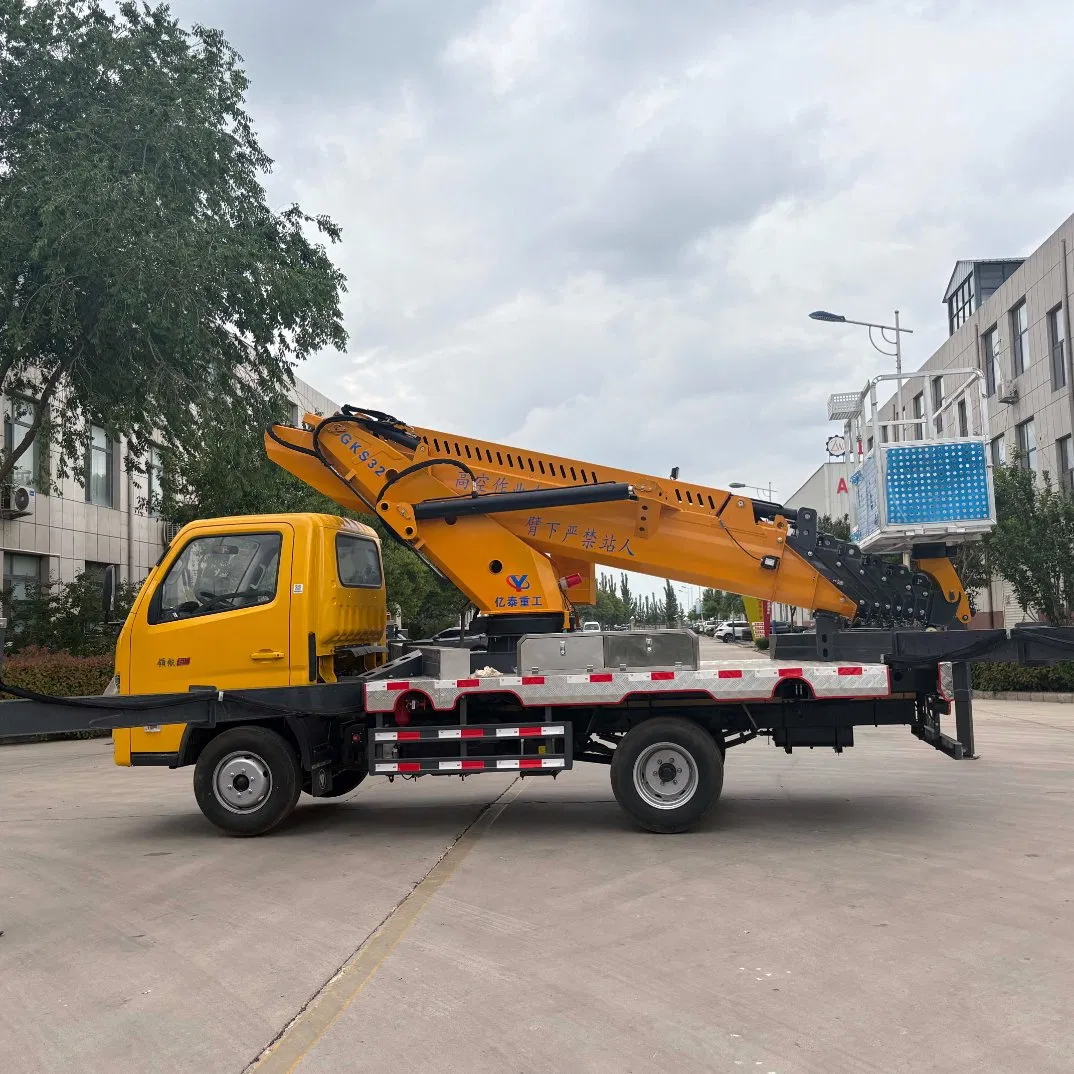
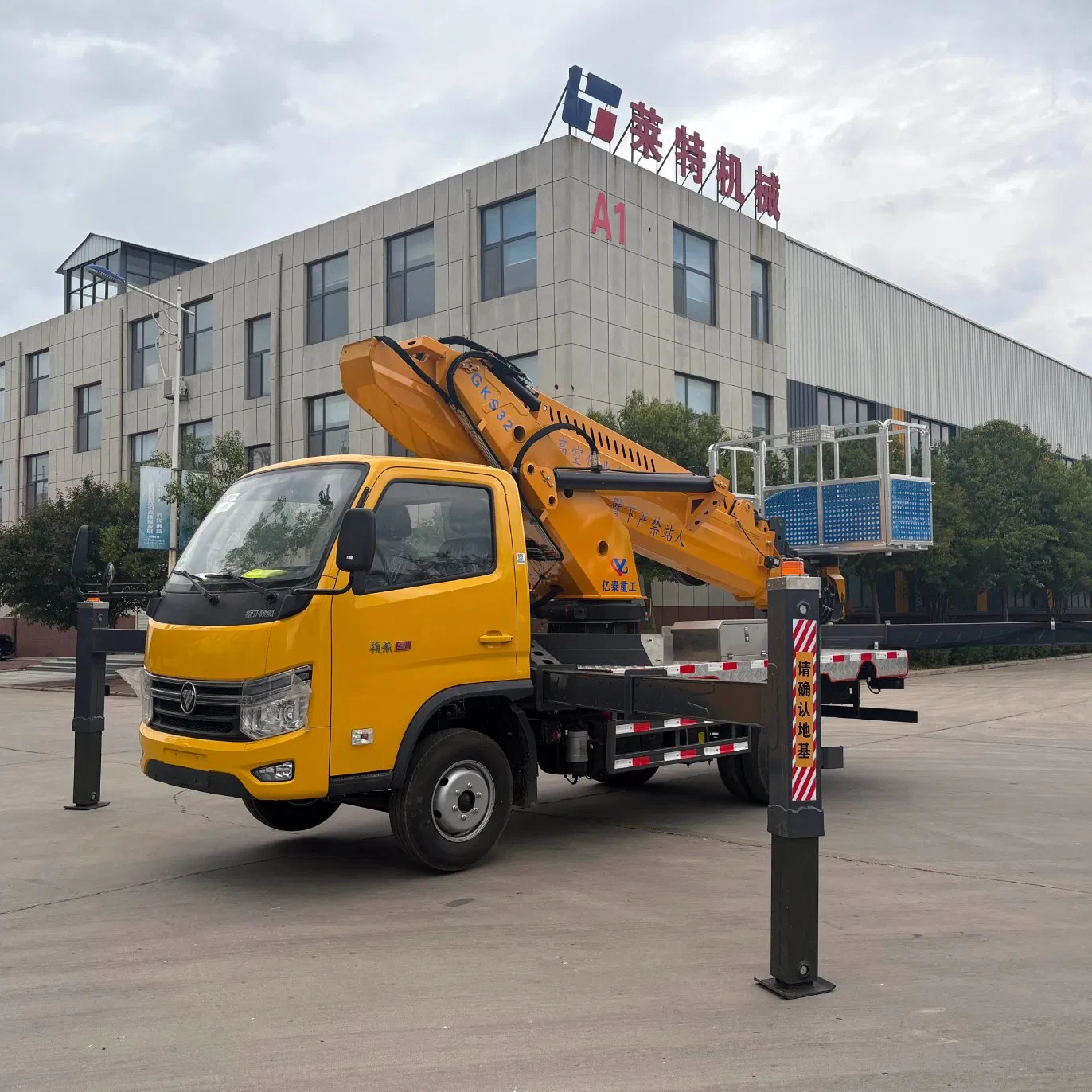
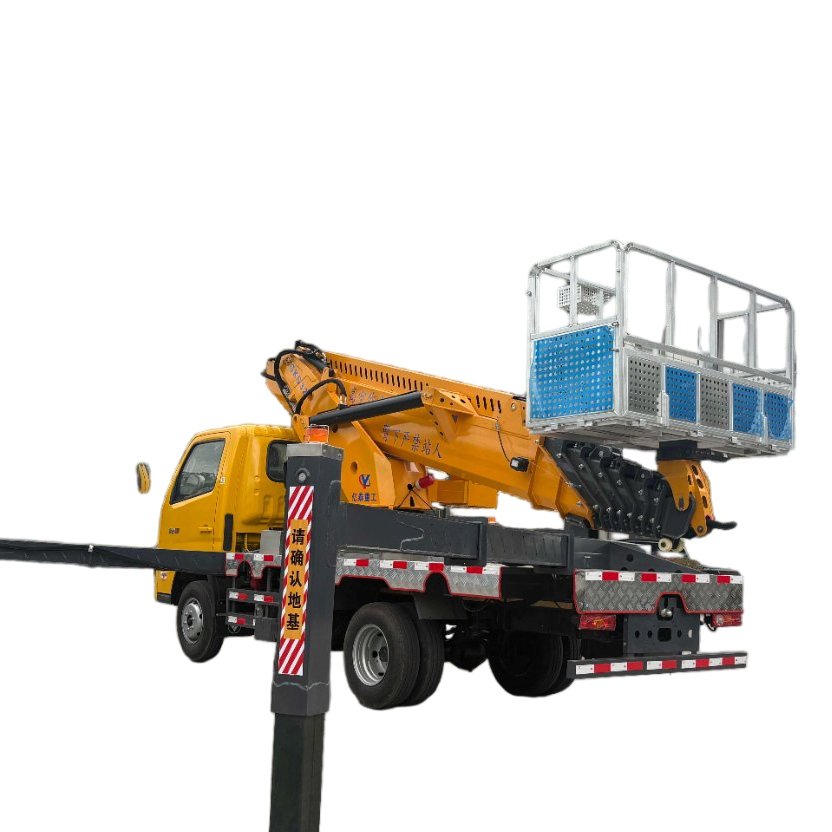
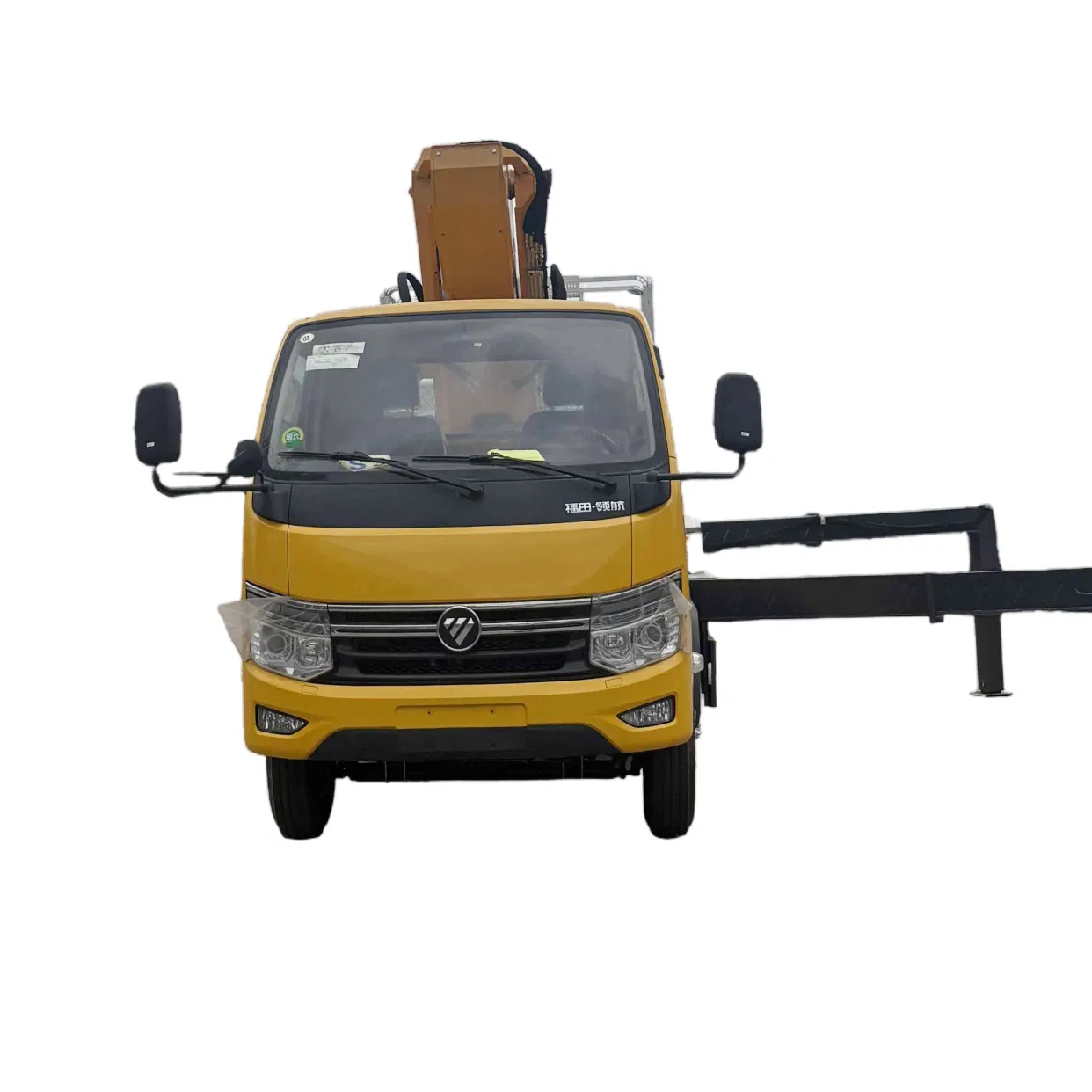
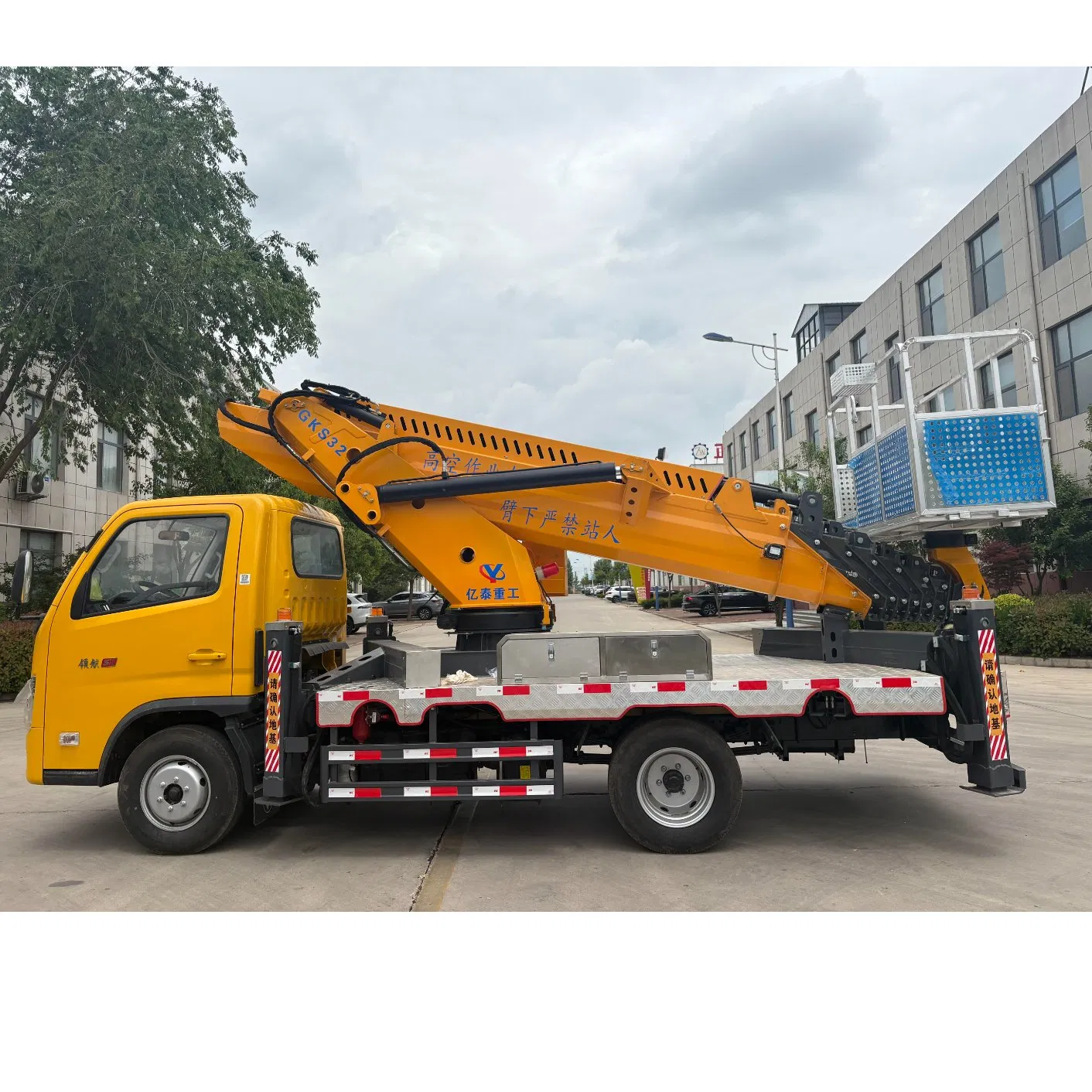
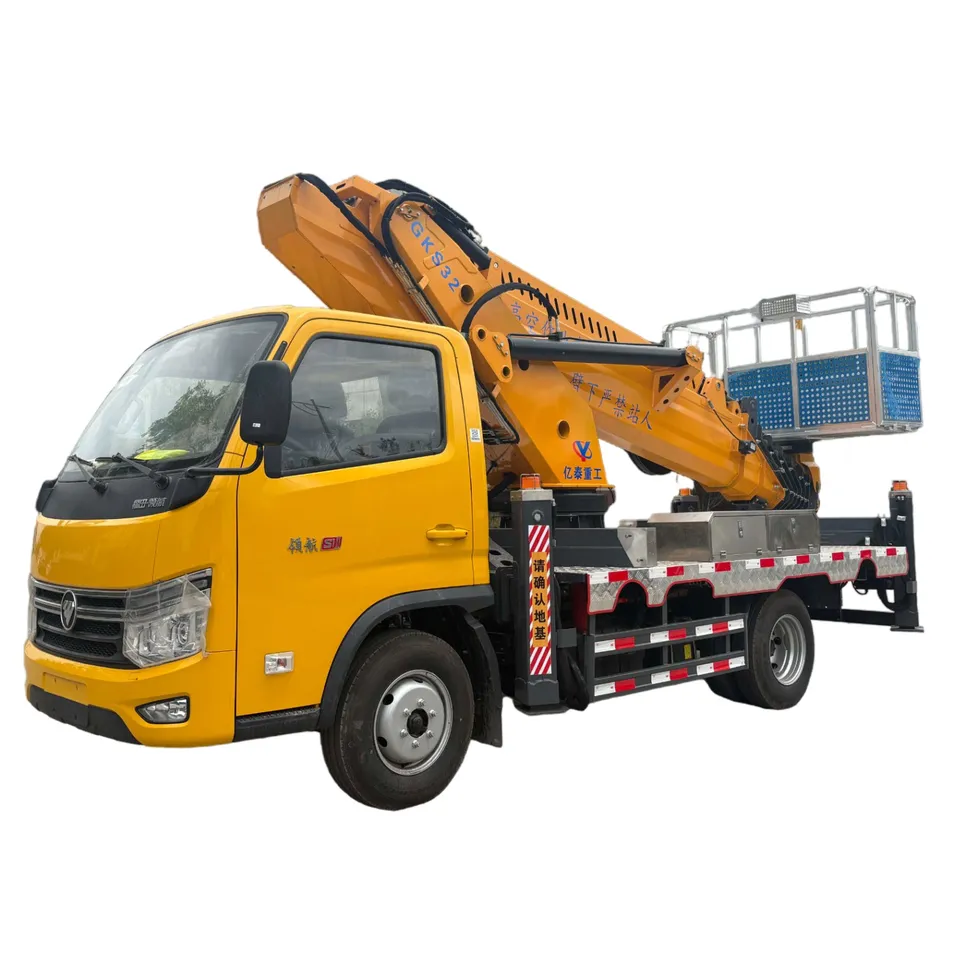
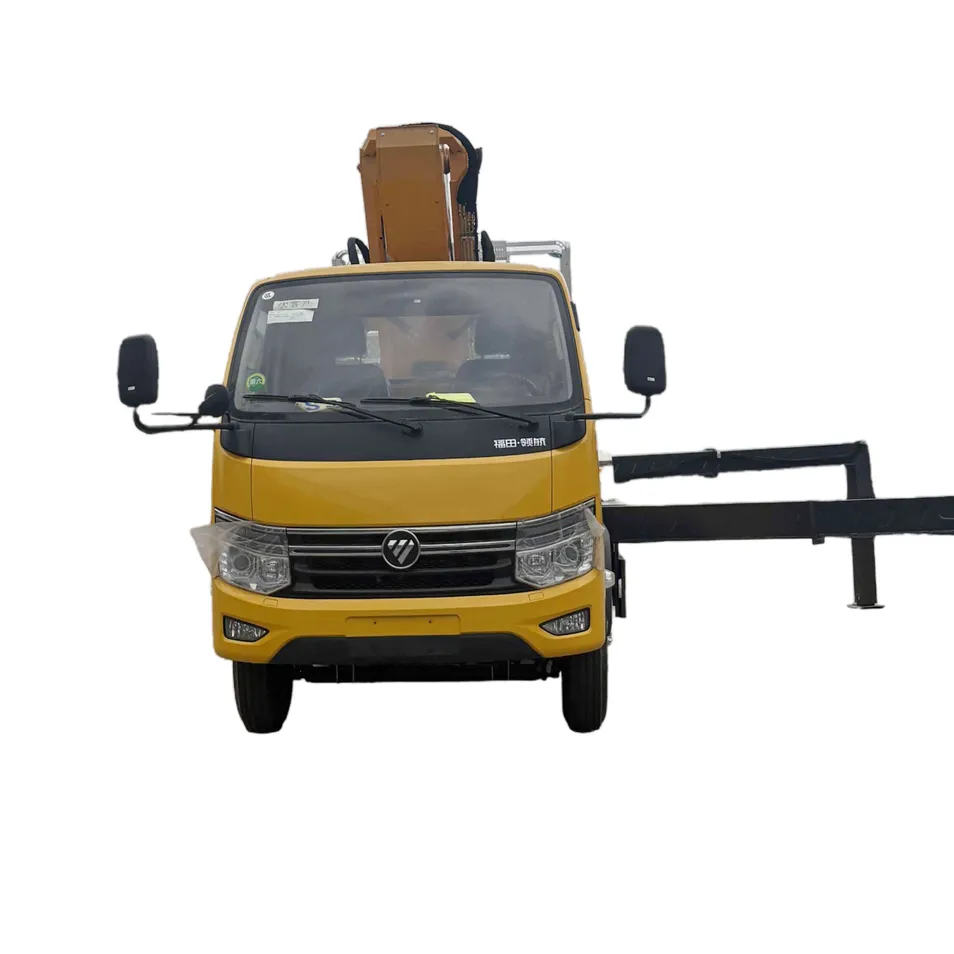
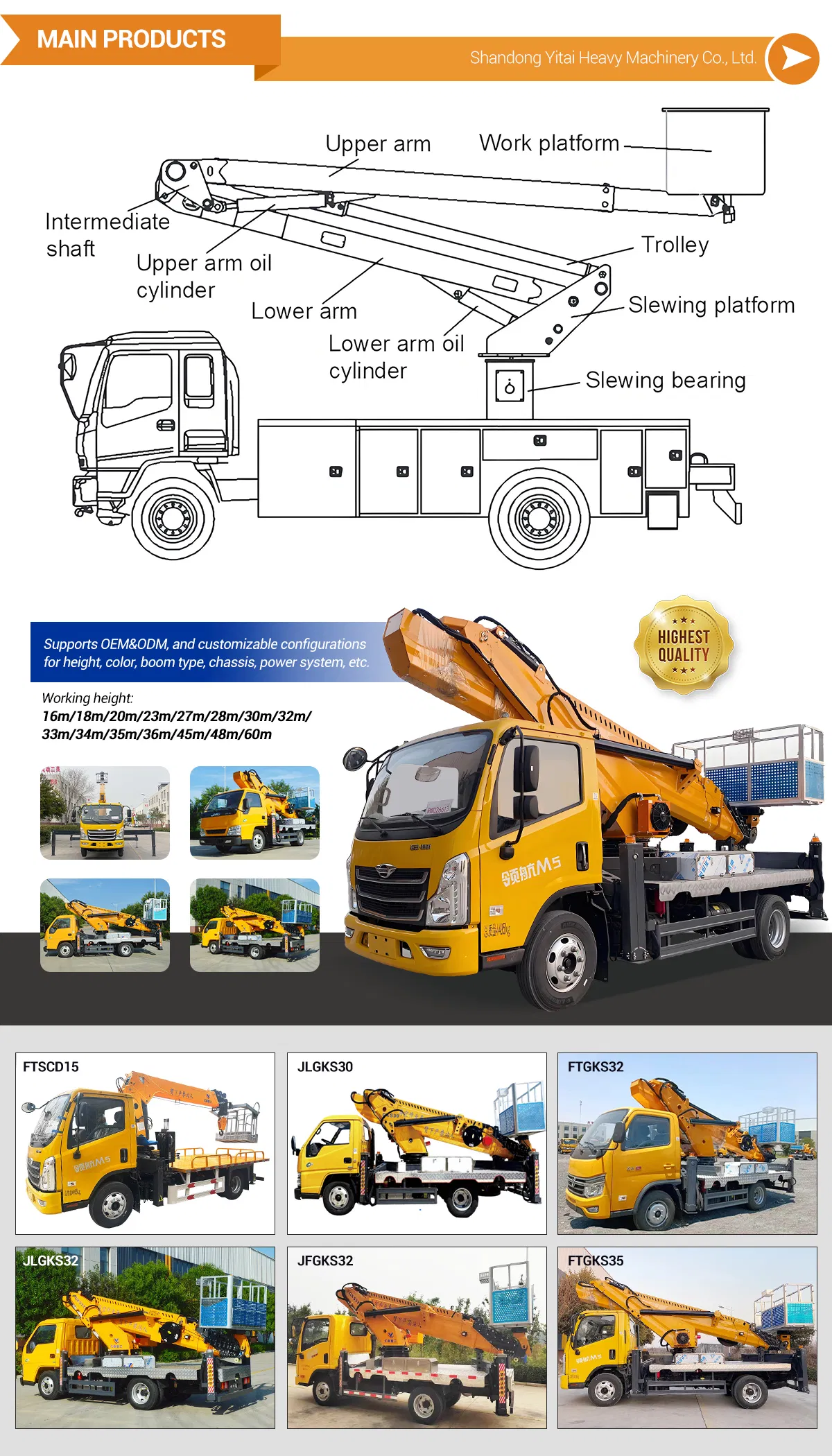
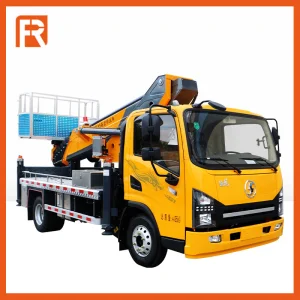
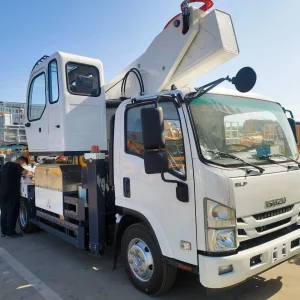
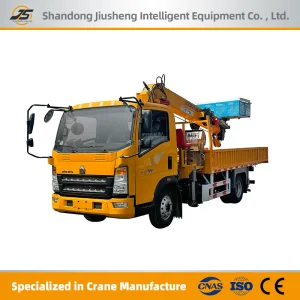
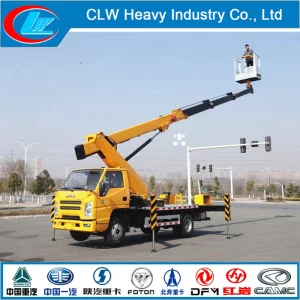
The FTGKS32 high-altitude work vehicle adopts a premium chassis and is equipped with a 122 horsepower full diesel engine, with a lifting capacity of up to 32 meters. It features a 200 kilogram suspension basket, oil brake, double hydraulic support legs, and 650 semi steel wire tires. The vehicle provides three operation modes: remote control, electronic control, and manual. With a large span and high stability, it is the premier choice for high-altitude operations such as construction and decoration. Customized services for products below 60 meters are also available to meet special operational needs.
Outrigger: Front and rear hydraulic V-outrigger (individually adjustable)
Operating System: Electro-hydraulic proportional control system
Manufacturing & Quality
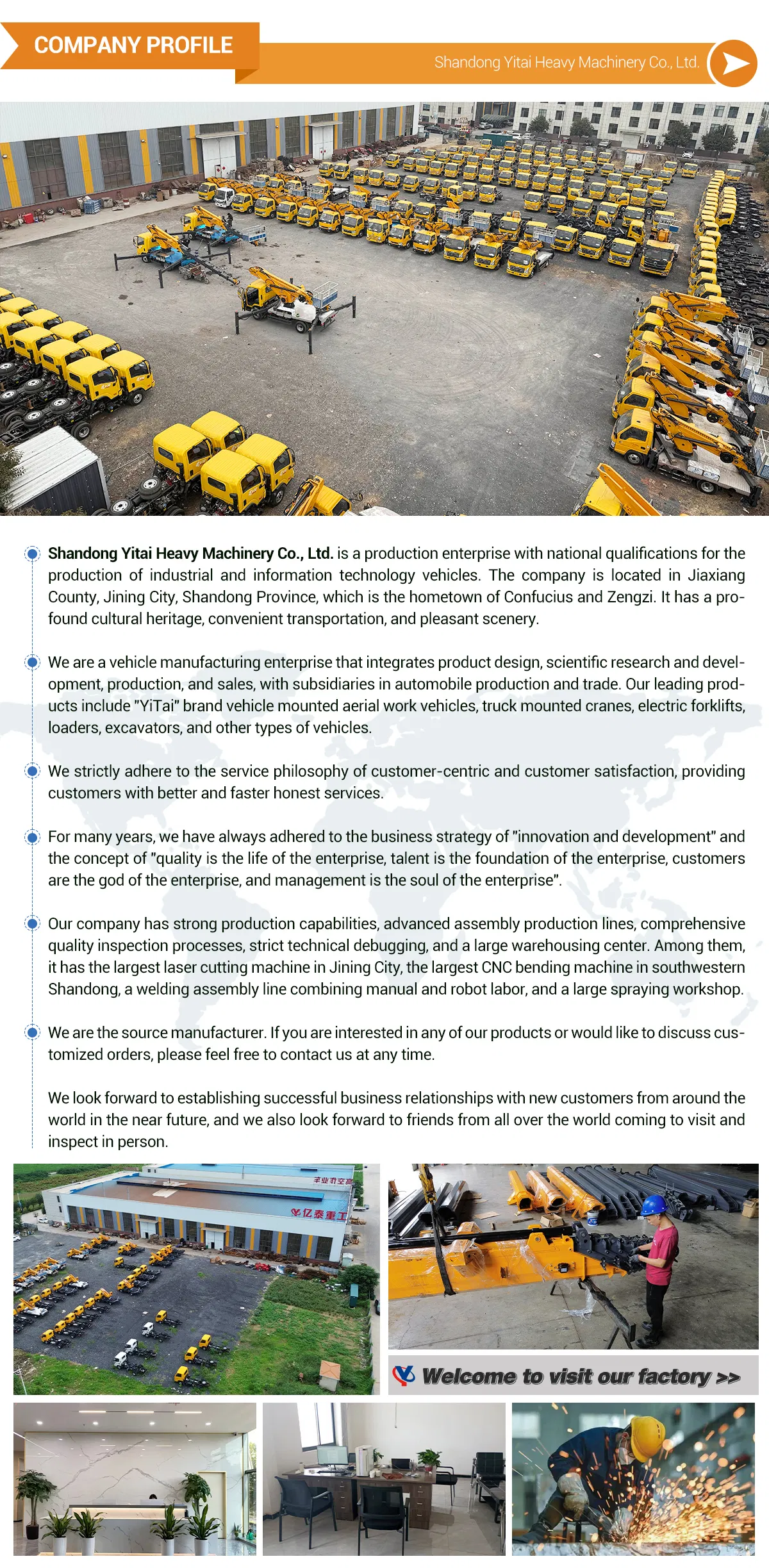
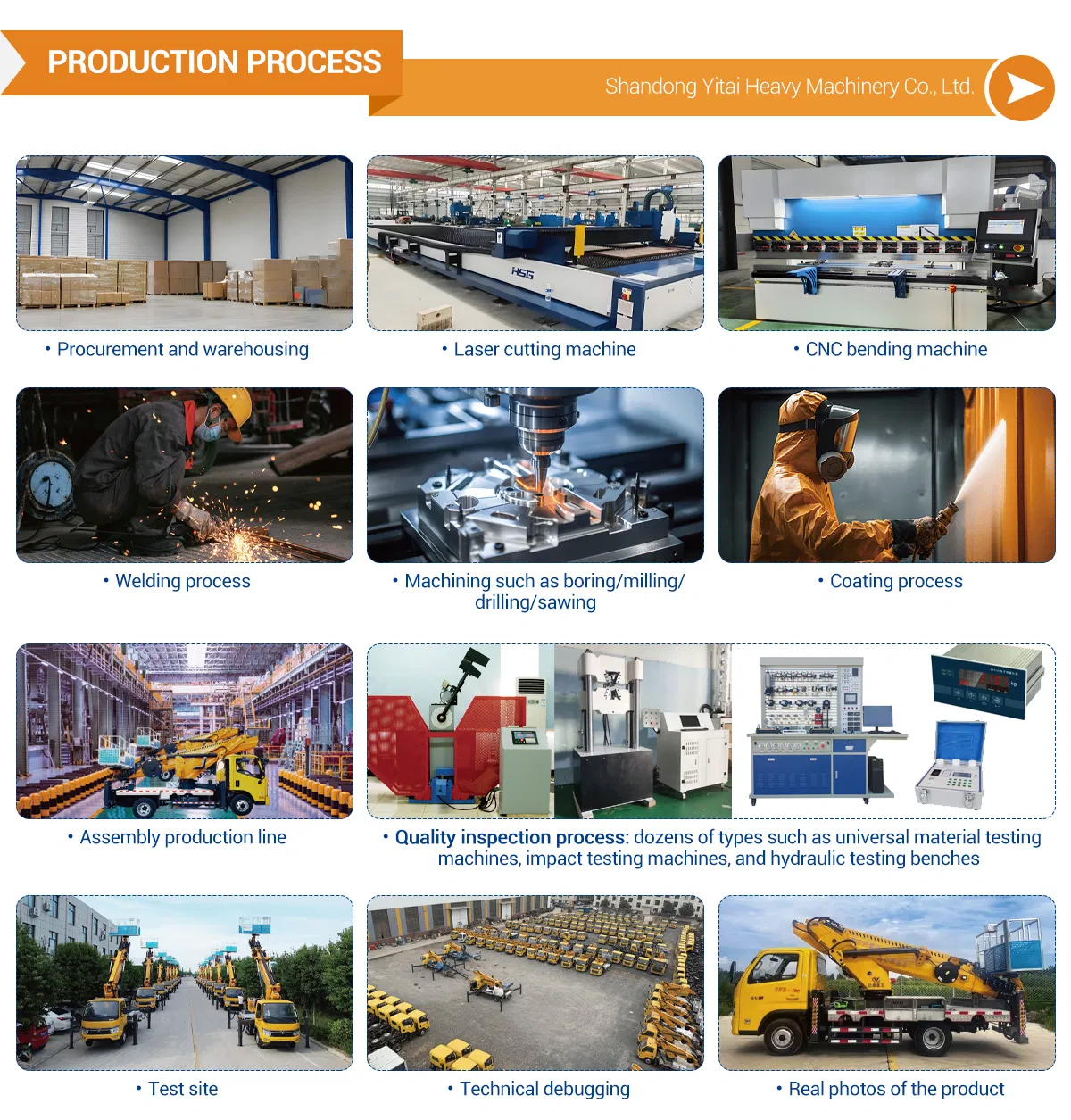
Our facility integrates product design, R&D, and production. Leading products include vehicle-mounted aerial work platforms, cranes, electric forklifts, and excavators. We feature advanced assembly lines, comprehensive quality inspection processes, and a large warehousing center. Our workshop is equipped with large-scale laser cutting machines, CNC bending machines, and robot welding assembly lines to ensure precision and durability.
Frequently Asked Questions
Q: What is the maximum working height of your aerial work platforms?
A: We offer a range of working heights; all models below 60 meters can be customized to suit your specific project needs.
Q: Are your platforms compliant with safety standards?
A: Yes, all devices come with built-in safety features such as tilt sensors, overload protection, and emergency descent systems.
Q: What is the maximum load capacity?
A: Our standard aerial work platform has a maximum carrying capacity of 200 kilograms, and we also support customization for personalized needs.
Q: How often should I perform maintenance?
A: New vehicles should have their fuel tank and filters cleaned after 200 hours. Under normal conditions, maintenance should occur every six months.
Q: Can these vehicles be used in extreme weather?
A: Diesel units perform well in sub-zero conditions. However, use should be avoided in winds exceeding 28 mph (45 km/h) or during lightning storms.
Q: What training is required for operators?
A: Operators must complete local regulatory training, including pre-operation inspection, secure load management, and emergency protocols.
 Progan Lift